From a 2050 Plan comment thread:
Maynard Hiss The 2050 residential dwelling unit densities are at .2 - .4 units per acre or 64 - 128 units per sq mile. The downtown core areas have densities Downtown Residential Overlay District (DROD) densities can average 50 dwelling units per acre, but can go as high as 200 dwelling units per acre. The average of 50 dwelling units per acre would be the equivalent to 32000 per sq mile, however, a much smaller area is covered by the district than a sq mile. In other words one sq mile of 2050 dwelling units may sit on less than an acre of downtown Sarasota, saving 639 acres of open space.
The ironic thing is, there are lots of open space requirements for the 2050 area low density in the rural area where all land is privatized and monopolized by the development or home owners association, and no one else is allowed to use it. For example, a developer must set aside 600 acres of open space for 400 units, but is not required to give public access to the area. Many of the functions in the 2050 developments including most types of agriculture and water conservation are not protected, and natural areas are fragmented.
Whereas in the highest density urban areas in the city of Sarasota where people use land most effectively there are no real requirements to assure high quality public open space to support the downtown high and medium density or even low density development. Note the high density developments share not only their open space with the 2050 low density residents they also share it with everyone else in the county and region and millions of tourist and their land guzzling cars.
Furthermore the open space in the downtown is often separated from the developments by a wall of 5 or more lanes of traffic, and the space itself is little more than a huge parking lot, which fragments the open space into tiny pieces of grass. Open space in the downtown is often not open space but instead covered with public cultural buildings such as auditoriums, art centers, garden clubs, orchestra halls, performing arts centers, all of which are not allowed in the 2050 public open spaces.
Showing posts with label 2050 changes. Show all posts
Tuesday, October 28, 2014
Monday, October 27, 2014
Susan Holik: "Builders run the show"
Reposted from the SH-T:
Monday's letters
Published: Monday, October 27, 2014 at 1:00 a.m.
Last Modified: Friday, October 24, 2014 at 6:28 p.m.
Builders run the show
Dismay doesn't begin to describe my reaction to attending my first Sarasota County Commission "hearing" on the 2050 resource management plan. Builders sought a green light to develop rural land east of Interstate 75 without constraint.
All interested individuals were invited to comment but, given the board's discernible disinterest, may as well have saved their collective breath.
My husband and I moved to Sarasota a year ago, seduced by its brand: a vibrant, walkable core with great cultural and educational resources and spectacular natural resources. We can walk to stores, movies, the library and restaurants, and shop the farmers' markets for locally grown produce. We were less familiar with Sarasota's local political realities.
Speaker after speaker expressed concern over sprawl, congestion, environmental harm, cost to taxpayers and overbuilding, potentially setting off another destructive bubble. They suggested that builders should instead focus on infill, where infrastructure already exists, no additional environmental havoc can be wreaked and studies demonstrate all generations prefer to live.
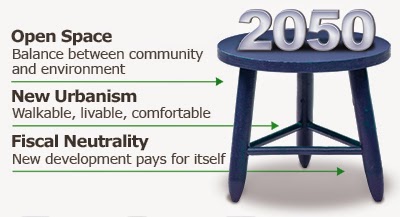
The 2050 plan requires "fiscal neutrality," i.e., growth revenue pays for infrastructure costs. Instead, the builders proposed that their designated expert determine the formula for calculating "neutrality." Significantly, neutrality will be determined at the outset and will not be monitored. Affordable housing required under 2050 will be offset against infrastructure costs.
In other words, we don't know the formula but the board is unconcerned: The builders will determine the formula -- and don't need to track it anyway. The taxpayers will take care of it.
Susan Holik
Sarasota
Comment:
Daniel Herriges · Top Commenter · Curriculum Developmentat C2 Education Centers
Susan Holik, you're dead-on about 2050. Depressing, isn't it? I would add that the kind of sprawl that folks like Pat Neal seem to be itching to build is essentially incapable of paying for its own infrastructure costs. It's too low-density, hence too many feet of new road, sewer pipe, etc. per taxpaying resident (all of which has to be maintained over time once it's there). This is why the developer community has been so adamant about changes to 2050 that amount to a subsidy for them: they cannot make a profit building single-family subdivisions without (implicit or explicit) taxpayer subsidies. The math pencils out better with infill, but the obstacles there are greater regulatory burdens, NIMBY property owners, and, I sense, an outdated mindset among the developers themselves that sprawl subdivisions where you're completely dependent on your car to get anywhere of interest are the future and the city is the past. How 1980s of them. Never mind that actual, nationwide market trends show the opposite.
Saturday, October 25, 2014
Lasting scars
Re-posted from the SH-T:
After 2050 plan revamp, lingering rancor and potential fallout
Photo taken by Zac Anderson on Monday October 20 Activists gather outside the Sarasota County administration building Monday morning to protest changes to the 2050 growth management plan.
Zac AndersonPublished: Saturday, October 25, 2014 at 8:01 p.m.
Last Modified: Saturday, October 25, 2014 at 8:01 p.m.
One speaker called it a “betrayal.” Another said Sarasota County commissioners were engaged in a “staggering violation of ethical public service.” A third said it appeared “the fix” was in.
While some degree of conflict seems inevitable, debate over the county's 2050 growth management plan has been especially rancorous. And it could leave lasting scars.
Some predict the 2050 overhaul — it largely came to a close last week after commissioners approved a final batch of revisions — will have political ramifications, while others hope the community can find a better way to talk about such issues going forward.
With demographic experts predicting more than 46,000 people will move to the county over the next decade, more clashes over development are unavoidable in a community that has long struggled with how to manage growth.
Such tensions will animate local politics for years to come and could grow more pronounced as some of the development allowed under 2050 begins.
The changes made over the last two years to the county's rural growth plan will make it easier to develop large swaths of land in eastern Sarasota County.
Landowners have been closely monitoring the revision process, and some are likely to move ahead now that the regulations are becoming less restrictive.
But they are also sure to encounter continued resistance from environmentalists and growth control advocates, who are bitter over how the 2050 debate unfolded.
Indeed, few issues have more sharply divided the community in recent years.
Kerry Kirschner, a former Sarasota mayor and executive director of the pro-business Argus Foundation, said he was struck by the “nastiness and lack of collegiality” in the 2050 public hearings.
A number of speakers at last Wednesday's hearing on the third and final round of changes to the plan accused county commissioners of being in the pocket of developers who donate to their campaigns.
Others predicted widespread environmental destruction and rampant overdevelopment.
Kirschner said many of the comments were over the top.
“I think it's distrust and, quite honestly, fear. So many people have moved here from someplace else and many moved here because they didn't like the environment in which they were living,” he said. For instance, he said, one man who spoke Wednesday said he came from Houston and did not want Sarasota County to develop in a similar manner.
“God bless him, I don't want to live in Houston either,” Kirschner joked, before adding that he believes such fears are misplaced.
But while Sarasota County may be a long way from becoming Houston, critics of the 2050 overhaul say they remain justified in feeling angry and frustrated.
Sarasota architect and growth control advocate Bill Zoller said he was surprised that the final 2050 hearing was “as genteel as it was” considering that “everybody felt completely discounted, disregarded and abused.”
Zoller noted that the county began the process of revising 2050 — adopted more than a decade ago as a compromise that allowed more intense development on rural lands but mandated higher standards — by holding a series of meetings with developers to get their complaints about the plan. That process excluded the public and started “on the completely wrong foot with a tin ear.”
The meetings that followed contained few chances for the public to truly influence the debate, he said.
Those concerned about the 2050 revisions also took issue with a controversial report, commissioned by the county, that blasted the plan. And they protested the dismissal of former county administrator Randall Reid, who was viewed as taking a more deliberate approach to reviewing 2050.
“They left our side completely alienated, absolutely alienated, but they didn't care,” Zoller said.
Those hard feelings could carry over into future conflicts as some of the new 2050 projects break ground.
After a lull during the recession, interest in developing rural properties governed by the 2050 plan is starting to pick up. And the Fruitville Road corridor may see the most immediate impacts.
The Villages of Lakewood Ranch South — which covers 5,500 acres between Fruitville Road and University Parkway east of Interstate 75 — is approved for 5,144 homes and a number of smaller projects are in the works for the area.
Among those testifying at Wednesday's 2050 hearing were three people who own land along Fruitville, all of whom supported the plan revisions and seemed interested in developing their land.
Also attending was Sarasota attorney Jim Turner, whose family owns the expansive Hi Hat Ranch between Fruitville and State Road 72 east of the interstate.
Turner has been a strong advocate for overhauling 2050.
“As to when or if Hi Hat would proceed, that remains to be seen,” Turner said. “We certainly don't have anything on the drawing board.”
A series of large housing projects in what is mostly a rural area could further inflame anti-development sentiment.
“Eventually one hopes it will translate into political changes,” Zoller said.
Charles Hines — who voted for most of the nine revisions to 2050 approved Wednesday and has been a steadfast supporter of overhauling the plan — is the only commissioner among the current five who is not term-limited and could stand for re-election.
Hines said that he focused on crafting a workable plan that can accommodate Sarasota County's projected growth in a responsible manner, not politics.
“The political stuff, save that for a year, year-and-a-half from now,” Hines said. “We make decisions every day and you try to do what's right for the community and some people are going to be happy and some people are going to be upset.”
Clashes over growth are nothing new in Sarasota County: The building boom that reached its apex in 2006 sparked citizen initiatives led by Zoller to amend the county's charter and put the brakes on development.
Three growth-related amendments were approved from 2007 to 2008 by wide margins.
They gave the county final approval over developments in land annexed by local cities, required a super majority commission vote for changes to the county's comprehensive plan that increase development density or intensity and required a unanimous vote to move the county's urban service boundary.
But public opinion started to shift shortly after the amendments were passed. The Great Recession wiped away thousands of high-paying construction jobs in the region.
County leaders came under pressure to stimulate the economy, and one strategy was to loosen development regulations.
In recent years the county commission has slashed road impact fees and taken other steps to encourage growth, culminating in the overhaul of the 2050 plan. But public opinion may be shifting again.
Only 11 percent of county residents surveyed in a recent poll cited jobs and the economy as their top concern, down from 18 percent last year. Growth-related issues were the top priority for 37 percent of residents, up from 20 percent in 2013.
Sarasota Audubon Society conservation chairman Wade Matthews cited the figures during Wednesday's hearing in arguing that commissioners were not listening to the public. Concerns about growth could play a big role in future county elections, Matthews predicted.
“The trend is on our side again,” he said. “How it will play out remains to be seen.”
Thursday, October 23, 2014
Those who wrote.
We thank all those who wrote in reasoned opposition to the Sarasota County Commission's hijacking of the 2050 Plan. Many wrote, a few kindly shared their work with us:
Charles Pattison, 1000 Friends of Florida
Cathy Antunes, Activist, founder, 2050 Action Network
Lillian Iannarone
Jono Miller, Activist, Adviser
John Wesley White, former Sarasota County Administrator
Becky Ayech, former Sarasota County Planning Commission member
Tom Matrullo, journalist, neighborhood activist
Dan Lobeck, attorney, activist
More letters
Anne Kaplan, former head of CONA SarasotaEven more letters. . .
Bill Zoller, architect, activist
Andre Mele, activist, Waterkeepers.org
Donna Cubit-Swoyer, activist
Mollie Cardamone, former mayor, Sarasota
Vickie Nighswander, candidate for Charter Review
Tina Rowbottom, Englewood resident
Alex Morris
Rob Kaercher
Joy Sica Naylor, Englewood resident
Back to the Cities
From a New York Times article mentioned by Joan Lovell at yesterday's 2050 hearing - Vishaan Chakrabarti, an architect, looks at major shifts in economics and demographics, and concludes that the suburbs are overfunded and possibly doomed:
After nearly 100 years in which suburban growth outpaced urban, millennials are reversing the trend. Once only a fraction of young college graduates wanted to move to cities; now about two-thirds do.
In the past, many of those who moved to cities in their 20s moved to the suburbs in their 30s, where schools were good, crime was low and family-oriented amenities were plentiful. But those factors are changing in cities, too. Crime has remained low, while public schools and parks have been getting better in many places.
Meanwhile, the economic challenges of starting a life in the suburbs have grown. Mortgages and car loans are harder to get for millennials, especially as they deal with onerous college debt. Though rents are increasing, it’s easier to rent an apartment in the city and take a bus or subway to work (millennials are also delaying the decision to have kids, which makes compact urban living easier).
Environmentally, the traumas of Hurricane Katrina and the Deepwater Horizon spill, the geopolitics of imported energy and the perils of domestic energy extraction all argue for a lifestyle that is more resource-efficient, particularly for parents focused on teaching their children to be aware of the world around them.
The same can be said for social values. Cities were once cast as dying places in contrast to the glowing suburban future; today, the future, inasmuch as it is tied in with issues like cultural diversity and marriage equality, is centered in the urban core.
This market is not about to buy in East Sarasota County
from the NYT:
No Picket Fence: Younger Adults Opting to Rent
. . . as the economy slowly improves and job growth picks up steam, the millions of 20- and 30-somethings who shared living quarters with friends or nestled in their parents’ basements to ride out the economic shock waves from the Great Recession are beginning to branch out on their own. But they are still largely shut out of the mortgage market.
“A lot of people 10 to 15 years ago who were able or willing to get a mortgage, now they can’t,” said Ian Shepherdson, chief economist for Pantheon Macroeconomics. “They’re caught in an awful Catch-22 trying to get a down payment” now that they’re spending on rent.
While construction of single-family homes is only halfway back to its prerecession levels, construction of multifamily units — which include both condos and rentals — is at its highest level in 25 years. Apartment construction is exceeding its prerecession peaks in some markets, including Austin, Tex.; the Washington metropolitan area; and San Jose, Calif., according to a recent report from the Joint Center for Housing Studies at Harvard.
Sarasota County approves changes to 2050 over public opposition
3rd round of 2050 changes wins commission's OK
By Zac Anderson
Published: Wednesday, October 22, 2014 at 10:47 p.m.
Last Modified: Wednesday, October 22, 2014 at 10:47 p.m.
The third and final round of changes to Sarasota County's 2050 growth management plan received overwhelming support Wednesday from county commissioners, who brushed aside concerns about environmental harm, sprawl and the cost to taxpayers and predicted the plan would now work more smoothly.. . . .
The 2050 revisions approved Wednesday will allow “hamlet” developments far from the county's urban core to be more densely clustered, decrease the amount of commercial space required in 2050 “villages” and offer incentives for complying with the affordable housing mandate in the plan. They also eliminate requirements that developers looking to build more than one village in a certain region wait 15 years between projects, and that new housing projects be denied if there is already sufficient inventory to meet demand.
The County heard from some 50 speakers, the majority came to express concerns about the developer-backed changes to the Plan:
“This isn't a plan for 2050, it's a plan for 1950,” said Longboat Key resident Larry Grossman in arguing the revisions would continue the sprawling, “low density, auto-dependent” development patterns that began a generation ago.
Wednesday, October 22, 2014
Last minute reminder: Hearing 1:30 pm today!
This is a very important hearing. Public attendance and input are important. Please come at 1:30 pm (or whenever you can this afternoon) to attend and give public input. Citizens are wearing white shirts to signify opposition to these changes.
- 1660 Ringling Blvd
- County Commission Chambers
- 1:30 pm
The public will have 5 minutes each for public input, as this is a public hearing. You can simply say "I am opposed to these changes." Be sure to sign a speaker's card and hand it in to the Commission secretary.
The 2050 plan should be strengthened, not weakened. These changes are making our Urban Service Boundary meaningless. See you there! -- Cathy
Fragmenting "strategic areas of statewide significance"
"These are the suitability surfaces for the Florida Ecological Greenways Network. Note the large parcel that is part of the Florida Forever Projects that is west of Myakka River State Park. It is interesting to note all the strategic areas that have been identified as areas of Florida Significance that the 2050 plan identifies as rural residential subdivisions.
The Sarasota County public passes a big bond issue to protect the strategic conservation lands and the state has identified the strategic areas of the County of statewide significance. And the planning department proposes to destroy it by fragmenting it with rural residential." More here.
Tuesday, October 21, 2014
Breaking news - new changes to the changes
The County has just circulated a document that contains several changes to the 2050 Amendments to be voted on on Wednesday.
Use this link to the document. Revisions in yellow.
Alternately, see the 2050 Comp Plan page on Facebook, where a copy of the pdf can be downloaded.
Use this link to the document. Revisions in yellow.
Alternately, see the 2050 Comp Plan page on Facebook, where a copy of the pdf can be downloaded.
Thursday, October 16, 2014
Wednesday, October 15, 2014
Tuesday, October 14, 2014
Lobeck: Gutting and Repealing Controls - Letter to the DEO
Mr. Eubanks and Ms. Brookens:
Attached is my analysis (in a shorter version and a longer one) of the latest round of amendments to the Sarasota 2050 Plan.
Please note in particular the complete elimination of the timing constraints in the amendment set for adoption hearing on October 22, which would open up the eastern county to massive urban growth all at one time, overwhelming infrastructure, including roads of critical state concern.
It might also be noted that the adoption version differs from the transmittal version in that the County is now dropping the proposed requirement for an adjustment of the developer’s fiscal neutrality report in the instance that the developer changes the mix of what is being actually developed. Although staff contends that this would require a rezoning and therefore a new report, the Sarasota 2050 Zoning Code has been amended to allow changes in what is being developed, administratively to a point and with Board approval beyond that, without any stated requirement for an adjustment of fiscal neutrality.
This is to request a copy of your ORC or other DEO comments on this amendment.
Thank you very much for your considerations.
Daniel J. Lobeck, Esq.
Personally and as President of Control Growth Now, Inc.
Friday, October 10, 2014
Opposing 2050: Letters and Emails
It is important to create a written record of public opposition to proposed 2050 changes and the inconsistent and absent elements of the process which brought these changes forward.
Cathy Antunes:
All who care about the next half century of Sarasota development are asked to write to the County Commission and to the state Department of Economic Opportunity (DEO) to protest 2050 changes. Please send your personal comments to:
Ray Eubanks ray.eubanks@deo.myflorida.com
Valerie Brookens valerie.brookens@deo.myflorida.com
Sarasota County BCC commissioners@scgov.net
(Letters we receive will be republished on the blog unless authors request otherwise.)
![]() |
| East Sarasota County, FL |
Cathy Antunes:
Dear Mr. Eubanks and Ms. Brookens,I am writing regarding my concern and opposition to the Sarasota County amendments submitted to change Sarasota 2050. . . .
Time for Action: Stop the Changes to 2050
Who's in charge here? The people of Sarasota, or a handful of developers?
Changes to the 2050 Plan
County Commission Vote
Wednesday, October 22nd
Expected start time for 2050 hearing, 1:30 pm
County Commission Vote
County Commission Chambers
1660 Ringling Boulevard
Sarasota FL 34236 (across from Post Office)
It's important to create a public record of opposition to changes. Please plan to attend and give input on October 22nd. Our quality of life, environment, prosperity, & tax burden will be impacted by 2050 changes.
Write to the County Commission and the state Department of Economic Opportunity to protest 2050 changes.
Please send your personal comments to:
Ray Eubanks ray.eubanks@deo.myflorida.com
Valerie Brookens valerie.brookens@deo.myflorida.com
Sarasota County BCC commissioners@scgov.net
Sarasota's Urban Service Boundary & Fiscal Neutrality are protected policies in the County Charter. Many believe the County Commission may be violating these and other protections by compromising the Urban Service Boundary (USB) through the "gutting" or indiscriminate, excessive amendment of 2050 . To learn more about 2050 & the Urban Service Boundary, click here
Our neighborhoods, taxes & quality of life are at risk due to proposed changes to 2050 which benefit a handful of landowners. 2050's fiscal neutrality policy requires development outside our Urban Service Boundary to pay for the infrastructure (urban services) it requires - both the upfront and long term infrastructure costs. Existing housing capacity within Sarasota's USB is enough to meet projected housing demand for decades. Facilitating surplus development outside the USB by compromising 2050 standards undermines our community prosperity.
Your input is critical. Please share this information with others.
For further information on the problems with changing 2050's fiscal neutrality policy, go to:
For Snail mail:
Ray Eubanks, Valerie Brookens
Department of Economic Opportunity
107 East Madison Street
Caldwell Building
Tallahassee, Florida 32399-4120
Sarasota County Commissioners
1660 Ringling Blvd.
Sarasota, FL 34236
Sarasota Council of Neighborhood Associations
CONA
PO Box 15788
Sarasota, Florida 34277
Questions, contact: conasarasota@hotmail.com
Sarasota Council of Neighborhood Associations
CONA
Lourdes Ramirez, President
PO Box 15788
Sarasota, Florida 34277
The 2050 Action Network
Subscribe to:
Posts (Atom)