Showing posts with label rezone. Show all posts

Friday, January 29, 2021

Which is the next rural farm to fall to Sarasota's developers?

 Few knew that an old horse farm sat right on Palmer Boulevard. Graceland, as this small acreage had long been known, was a reality before all the development east of I75. Gradually it became a patch of rural life nearly invisible within a network of roads, gated communities, and developer ambitions.

Now Graceland's gone, as the Sarasota Board of County Commissioners ignored the arguments of residents, and even of its own Planning staff.

Bye, bye Palmer Horse Farm and our Rural Heritage Lifestyle
Tuesday afternoon four of our five Sarasota County Commissioners (Commissioner Detert voted NO) voted in favor of HORTON HOMES paving over our Rural Heritage Neighborhood with 46- Cluster homes!  It was extremely disappointing that Commissioners Mike Moran, Christian Ziegler, Al Maio and newly elected Ron Cutsinger chose to vote against the voices of local residents asking for denial of this rezone.  They also voted against their own planning staff recommendations that this land did not fit the criteria to be rezoned to 46-homes.  
BYE, BYE  HORSE FARM
A big thank you to all our Palmer East Neighbors who emailed the commissioners, zoomed in, attended, and gave excellent testimony at the meeting.  
This loss is very disappointing to us all, but we will push forward and continue to be a voice for our rural neighborhoods asking/demanding our county government abides by  the zoning regulations of the 2050 Comprehensive Plan principles to protect the Rural Heritage Lifestyle and Open Vistas here.
Contact Palmer East Group here.
Welcome New Palmer East Neighbors

Wednesday, July 3, 2019

Residents oppose cluster development on Rural Heritage road


EMAIL COUNTY COMMISSIONERS TODAY!

Help preserve our Rural Heritage Neighborhoods

SAVE THE DATE -- JULY 10th, 1:30 PM
Protect our homes and way of life.
STOP Proposed Rezone - 37-Cluster Homes on Boleyn Rd. - Canopy Road


This is important. Please EMAIL: Sarasota County Commissioners that you are OPPOSED to the proposed rezone RZ18-09 on Boleyn Road to a 37-cluster home development.

In your own words, here are some points you can make:

Please DENY the proposed rezone of 37 homes on Boleyn Road.
  • * does not conform to the existing land use pattern of one home per five acres
  • * more traffic & pedestrian safety concerns on overburdened Debrecen Road
  • * potential loss of canopy oak trees on a designated protected Canopy Tree Road
  • * not compatible to existing Palmer Farms Subdivision
  • * would change way of life for existing residents and could negatively affect property values

(don't forget to put your address on your email.)

Your county commission needs to know that you are OPPOSED to RZ18-09, proposed rezone 37-cluster homes in our Rural Heritage neighborhoods and why.

Email: planner@scgov.net
Subject: RZ18-09, Arbour Lake Reserve
Please DENY the proposed rezone of 37 homes on Boleyn Road.


***SAVE THE DATE***
DATE: WED., JULY 10TH, 1:30 PM
WHAT: County Commission Meeting
Please Join Us at this final meeting to oppose the proposed rezone petition to develop 37-cluster home development in our rural heritage neighborhood.

Where: Sarasota County Admin.
1660 Ringling Blvd., Sarasota

DON'T MISS THIS IMPORTANT MEETING
WE REALLY NEED YOUR SUPPORT!


Boleyn Road Rural Heritage Canopy


More development


Once it is gone . . . it's gone


Palmer East Group

Thursday, October 4, 2018

Groundhog Day: Why the Rush to Rezone Parcel #3?


When James Gabbert proposed building heavy industrial waste operation last year on a parcel of public land near the Celery Fields, the Board got a bellyful from the people. No industry, they said. It’s wrong on so many levels -- bad for the roads, for the birds, for the entire eco-system, for property values, for the future development of the area.

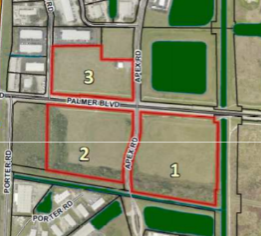
Since then, instead of taking a fresh look at the area and seeking alternatives to industry, the Board hired a Miami consultant to rezone one of the “Quad Parcels” at Apex and Palmer Blvd. -- parcel #3. And lo and behold, the consultant has returned a recommendation that the county allow an 80,0000-square-foot industrial facility on this parcel. 


On October 10, the Board will listen to the consultant, and if it likes what it hears, it can initiate the public process to rezone parcel #3 for industrial use. The parcel is currently zoned OUR - Open Use Rural. To rezone for industry, having no actual client or developer, the Board would send the Lambert recommendation with staff notes to a Neighborhood Workshop, then a Planning Commission hearing, then a final Board hearing. 


On our public lands, it's Groundhog Day all over again.


Parcel #3 is the smallest of the Quad parcels - nine acres in all, but two acres are reserved for a permanent fire station. The remaining seven acres are what the consultant, Lambert Advisory LLC of Miami, was asked to rezone for sale.

Lambert began work in June and completed its “assessment” of parcel 3 in mid-August.

Below are some of the questions and concerns raised by this rush to rezone.
  • We have yet to hear of a publicly beneficial reason why the County wants to sell this public parcel to a private developer. When the idea was originally presented by Commissioner Al Maio last November, the motive was to sell public lands to reduce a budget shortfall. Mr. Maio has since stated that the county is in excellent fiscal condition (3 1/2 min. audio), and that "there is no shortfall" (17 sec. audio) facing the County in the near future. Mr. Maio has also never explained why he wants to sell all three Quad parcels. He simply has said he wants to.
  • Note: “Highest and best use” (HBU) is land-use code for “ignore every consideration except sale price.” Rather than consider uses beneficial to the community for parcel 3 -- uses which certainly exist -- the Board is seeking to sell to the highest bidder. An HBU assessment looks only at sales price. The tactic allows the consultant to ignore virtually everything residents consider important to their quality of life:
    1. Environment - bird sanctuary, water, air
    2. Roads - traffic, large trucks (already to be augmented by James Gabbert's six-acre Waste Transfer Station at Porter and Palmer).
    3. Community - homes, schools, amenities on Palmer Blvd. and Cattlemen
    4. Economic potential - eco-tourism at the Celery Fields, retail along West Palmer.
    5. Macro-trends - moving toward residential, recreational gateway features (visibility from highway).
    6. Future possibility - a citizens group has offered a wide variety of uses and synergies for the the four quad parcels, supported by the community: everything from athletic resources to a history archive to shops, affordable housing, a cafe, a market, the educational potential of a YMCA with programs tied in with Audubon’s nature center. 
Lambert submitted its recommendation for industry in a 49-page report. It recommends industry, arguing that this would bring a markedly higher sale price than office, commercial, or residential uses. An 80,000-square-foot industrial facility could be an example of highest and best use, the report states.

Restaurant Depot, Tampa

The recommendation raises additional questions:
  • If “industry” would assure the highest value, why is no one coming to the nearby Fruitville Initiative to buy land there to use for Industry? The Initiative’s parcels lie just to the north, along Apex Rd., which turns into Coburn Rd., near I-75. All 200 acres are designated MEC, just like parcel #3. At the Fruitville Initiative, it's another story:
    • The landowners are not getting inquiries from developers about industrial uses.
    • They’re mainly receiving proposals for multi-family residential with some interest in office and commercial uses. 
    Can Lambert or our Planning Dept. or the Board explain this contradiction between Lambert’s finding and actual market activity?

  • A citizens group working to find alternative uses for the public quad parcels ("Fresh Start") sought to communicate with Lambert Advisory, but was told by County staff not to attempt to contact the Lambert group. Staff responded to Fresh Start on July 3, 2018:
Out of an abundance of caution to the process, I would not be comfortable with a private group directly communicating with a consultant on an item that will culminate in a quasi-hearing on a Board directive that was decidedly different from your own.  The consultant has been made aware of the efforts of Fresh Start and the dynamics and sensitivities of the area, but because we have reached out to an independent expert on this matter, it is best to limit the influences on the data. 
  • The task given to Lambert came with scoping instructions -- a to-do list -- from the County:
Scope of Consultant Task #4
How did preventing communication with the community facilitate the task of developing “a general understanding of the community and its residents”?
  • Fresh Start asked why Lambert Advisory’s assessment of parcel #3 contained no reference to the traffic and road constraints, which weighed heavily in hearings of the Planning Commission and the Board last year on the Gabbert Waste Processing Proposal. Residents were emphasized the fragility of Palmer Blvd. and Apex Road, and the poor Level of Service. 

  • Here is the Consultant’s response, forwarded by county staff:
By definition (Appraisal Institute), highest and best use represents the reasonably probable and legal use of vacant land or an improved property that is physically possible, appropriately supported, financially feasible and that results in the highest value.  It takes into consideration any known constraints to development such as environmental or traffic/roadway capacity issues (documented through an applicable public agency). At the time of the study, we were not aware of  any documented issues related to development constraints, including roadway capacity. (emphasis added)
Road conditions were a hugely important determining factor at the Gabbert hearings. Would the County not have been advised to address the roads before hiring a consultant for $61,209 to recommend industry at the Quads?
  • In preparing a briefing paper for Commissioners on the Lambert Report, staff originally seemed willing to accept the Lambert recommendation. But now it does not support it:
  • Given the astonishing pace of approved housing development in the area, why would the Board go full speed ahead with rezoning this parcel for industry?
The Board has been happy to rapidly approve several developers' proposals for new residential communities in the area:
1,080 new homes within walking distance, and
2,390 more homes within a few minutes' drive from this intersection
____
3,470 new nearby homes
Where's the logic:  Do the Commissioners have some way to reconcile their multiple approvals of residential development on the one hand with zoning that burdens these essential roads with industrial uses and truck traffic on the other? We'd love to hear it

How can the Board rezone to industrial use on the basis of a "study" that in fact did not:
  • Consider the impact of a large industrial facility upon the ecology, the community, the economy, and property values?
  • Look at the existing and trending uses of the area by residents and tourist visitors who walk, jog, hike, bird, kayak and fish at and around the Celery Fields?
  • Have any county transportation data on the road and traffic conditions at Apex and Palmer?

Groundhog Day

In short, the hiring of a Consultant who has brought in a recommendation to industrialize parcel #3 brings us back to February 2017, when Restaurant Depot sought to put a giant warehouse sales operation on the same parcel, and encountered strong opposition. Again, roads and large trucks were the main issue.

For ten months -- from December 2017 to September 2018 -- the Fresh Start group attempted a dialog with the Board, but as of yet, it's still waiting for responses to its proposals and answers to its many questions.

Perhaps it's time for the Board to respond to the public. They might start with answering these questions: 
  1. There is no budget crunch, no shortfall. What's the benefit to the community in selling any of our public lands here? 
  2. Why pay a consultant to rezone to Industry before addressing the roads? 
  3. Why withhold from the consultant the basic known facts and studies of the roads?


Image from the Fresh Start presentation of 9.12.18, courtesy of the Fresh Start Initiative.


On Oct. 10, sometime about 9:30 a.m. or a little after, the Board will discuss the Lambert Advisory recommendation. Let's be there, to remind them we're still here, and we still care.
Commission Chamber Ground Floor
1660 Ringling Blvd.

Sunday, June 10, 2018

Robinson vs. Robinson

In a recent opinion piece in the Herald-Tribune, Christine Robinson, former County Commissioner and executive director of the Argus Foundation, argued that the future of properties zoned for ILW -- Industrial, Light Manufacturing, Warehouse -- is threatened by residential and recreational development.

Citing the Legacy Trail and the community's efforts to protect the Celery Fields as examples of land use initiatives that "hamper" ILW-zoned properties, Robinson wrote:

"Every year, we lose industrial light warehouse properties, both currently designated and those planned to be designated. Residential dwellings are being approved on or next to industrial lands. This is hampering owners’ ability to use those industrial properties for what they have been intended." May 14, 2018 HT guest column.

Robinson correctly notes that the Board of Sarasota County Commissioners has voted to approve locating residential near industrial, and that it has also approved converting existing ILW properties to residential. She strongly contends that existing ILW uses need to be "protected" from the "mission creep" of housing, parks and open space amenities.

What's striking about Robinson's championing of ILW properties is that as a Sarasota County Commissioner, she was at the forefront of the movement to convert ILW to residential use. In some cases, the conversion was approved over the objections of the neighbors.

In short, Argus director Robinson's concerns about issues of land use infringement did not prevent County Commissioner Robinson from voting for the precise rezoning changes she says have damaged the public trust.

The public record shows that Commissioner Robinson voted to approve converting commercial, office, and industrial uses to residential. In warning of the dangers to industry and to public trust, Robinson is taking issue with her own voting record. Here are three public hearings at which Commissioner Robinson voted to rezone ILW to residential:

25 May 2016: Adopted Rezone No. 15-23
On May 25, 2016, Robinson voted to adopt Rezone No. 15-23 "to redesignate approximately 21 acres of the Palmer Ranch Increment IV Development of Regional Impact (DRI), Parcels A8 and A9, from commercial/office and industrial uses to residential uses for the development of 140 multi-family dwelling units."
Commissioner Robinson voted to convert 21 acres of ILW to residential.

27 Oct 2015: Adopted Rezone No. 14-36.

Robinson voted on October 27, 2015 to adopt Rezone No. 14-36 "to redesignate an approximate 20 acre portion of Parcel A7 within the Palmer Park of Commerce, from commercial/office and industrial uses to residential uses for the development of 260 multi-family dwelling units." see page 1 of staff report.
  • see page 13 for the definitive redesignation statement. 
Commissioner Robinson voted to convert 20 acres of ILW to residential over the neighbors' objections. See 27 August 2015 hearing for additional information.


9 July 2014: Adopted Rezone Petition 13-27
On July 9, 2014, Robinson voted to adopt Rezone Petition 13-27 "to redesignate approximately 68 acres, known as Parcels A2 and A6 within the Palmer Park of Commerce, from commercial/office and industrial uses to residential uses for the development of 180 single-family residential dwelling units." 
Commissioner Robinson voted to convert 68 acres of ILW to residential over the neighbors' objections.

Summing up: In three votes, Commissioner Robinson voted to remove over 100 acres from lands set aside for light industrial, office, and warehouse use and let developers build houses and apartments there instead. Robinson's record on the Commission is at odds with her posture as director of the county's influential Argus lobby.

The public conversation about planning and land use is important and complex, and it needs the perspective of business leaders as well as voices from the whole spectrum of the community. But to truly benefit our community, every perspective deserves to be presented with informed transparency.