Tuesday, September 18, 2018

LWV analysis of proposed amendments to Florida Constitution

2018 Florida Constitutional Amendments

The League of Women Voters of Florida has conducted independent research on the pros and cons of all thirteen amendments that will be on the ballot in Novemeber. Here are some summaries of the meaning and impact of a yes or no vote on the amendments. For more details on the Amendments click here. 
For more views, see the analysis by the Tampa Bay Times, and another by the Florida Phoenix.

Thirteen proposed amendments to the Florida Constitution are on the General Election ballot, nine more than appeared on the 2016 ballot. However, voters face more questions than is apparent.
That’s because Florida’s Constitution Revision Commission (CRC), which convenes every 20 years, is allowed by law to bundle more than one issue into each question. An example of the CRC’s issue bundling in 2018 is Amendment 9, which asks voters to decide whether to ban offshore oil drilling, and whether to ban e-cigarettes at workplaces. Like the CRC’s other bundled amendments, voters cannot cast separate votes on drilling and vaping. These are all-or-nothing propositions.
Of the 13 amendments on this year’s ballot, eight were proposed by the CRC, three by the Florida Legislature and two by citizen initiative. To pass, each of them must receive at least 60 percent approval by voters. Unless otherwise indicated, changes to the Constitution take effect on Jan. 8, 2019.
Below are summaries of each amendment, including the impact of a yes or no vote.
Amendment 1
Increased Homestead Property Tax Exemption
Grants an additional $25,000 homestead exemption for homes valued over $125,000. Owners of homes worth more than $100,000 would also receive an increase in their exemption.
A YES vote on Amendment 1 would:
Allow homeowners to deduct an additional $25,000 from the taxable value of a home worth more than $100,000, starting on Jan. 1, 2019.
Exclude local school taxes from the new exemption.
Cost Florida’s cities, counties and other taxing authorities an estimated $687.5 million annually, starting in 2019, according to the Florida Association of Counties.
Likely result in cuts to services or higher local rates to make up for the revenue losses, or possibly both.
A NO vote on Amendment 1 would:
Retain the current homestead tax exemptions, which total $50,000.
Have no effect on the amount of tax revenue collected by city and county governments.
Supporters: Unknown (Homesteaders, mayne??)
Opponents: Florida Association of Counties; Florida Education Association; Florida League of Cities; Florida Policy Institute; League of Women Voters of Florida; Progress Florida

Amendment 2
Limitations on Property Tax Assessments
Makes permanent what currently is a temporary cap of 10 percent on annual property value increases for vacation homes, apartments and commercial property, effectively limiting increases on tax bills.
A YES vote on Amendment 2 would:
Make permanent the 10 percent limit on increases in tax value for non-homestead property, thus reducing tax bills.
Continue to deny local governments (excluding school districts) tax revenue they would otherwise collect from rising property values.
A NO vote on Amendment 2 would:
End the practice of limiting tax increases on non-homestead property by limiting property-value increases to 10 percent.
Possibly lead to higher tax bills for non-homestead property, resulting in additional revenue to local governments of about $700 million, according to the state Revenue Estimating Conference.
Supporters: Florida Association of Realtors; Florida Chamber of Commerce; Florida TaxWatch
Opponents: Florida Education Association; League of Women Voters of Florida

Amendment 3
Voter Control of Gambling in Florida
Requires approval of any new casino gambling through a citizen-initiative constitutional amendment, effectively barring the Legislature from making those gambling decisions by passing laws.
A YES vote on Amendment 3 would:
Require that voters approve a constitutional amendment through citizen initiative to authorize any new casino gambling in Florida, essentially stripping that authority from the Legislature.
Preclude constitutional approval of casinos through other means, including amendments offered by the Legislature or by the CRC.
Continue to allow the Legislature to approve other types of non-casino gambling, such as poker rooms, bingo, lotteries and fantasy sports.
Allow the Legislature to oversee, regulate and tax any casino-type gambling that voters approve through a constitutional amendment.
Not affect the state’s ability to negotiate casino agreements with Native-American
A NO vote on Amendment 3 would:
Continue to allow casino gambling either through new laws passed by the Legislature or through various types of constitutional amendments.
Supporters: Disney Worldwide Services; Florida Chamber of Commerce; Florida Restaurant and Lodging Association; League of Women Voters of Florida; No Casinos Inc.; Seminole Tribe of Florida
Opponents: Florida Education Association

Amendment 4
Voting Restoration Amendment
Allows those who have completed their entire sentence to earn the right to vote back except for those convicted of murder or felony sex offenses..
A YES vote on Amendment 4 would:
Grant felons – excluding those convicted of murder or felony sex crimes – the right to vote after completing all the terms of their sentence. The Governor’s Clemency Board studies have shown that recidivism rates drop about 30% if person has their voting rights restored. Another study shows that with a lower recidivism rate, costs of incarceration go down, employment goes up and that the positive impact on the Florida economy is $365 million per year.
A NO vote on Amendment 4 would:
Continue the current requirement that felons wait a minimum of five years before applying to have their voting rights restored, and then appear before the governor and Cabinet to appeal for those rights.
Continue allowing the governor and Cabinet sole authority to determine whether a felon is allowed to vote again.
Supporters: American Civil Liberties Union;Florida Rights Restoration Coalition; Floridians for a Fair Democracy; Florida Policy Institute; Florida Education Association; Florida National Organization for Women; League of Women Voters of Florida; Progress Florida
Opponents: Floridians for a Sensible Voting Rights Policy 

Amendment 5
Supermajority Vote Required to Impose, Authorize, or Raise State Taxes or Fees
Requires a two-thirds vote of the Legislature to approve any new or increased taxes or fees, rather than a simple majority.
A YES vote on Amendment 5 would:
Require a two-thirds vote by the state House and Senate to increase existing taxes and fees or impose new ones.
Require that any new or increased taxes or fees be voted on in stand-alone bills.
Exclude local governments from any supermajority requirements if they choose to raise taxes or fees.
A NO vote on Amendment 5 would:
Allow the Legislature to continue approving increased or new taxes and fees through a simple majority vote.
Allow the Legislature to continue bundling tax and fee increases with bills that include other measures.
Supporters: Florida TaxWatch; Florida Chamber of Commerce
Opponents: Florida Education Association; Florida Policy Institute; League of Women Voters of Florida; Progress Florida

Amendment 6
Rights of Crime Victims; Judges
Vastly expands the scope of victims rights under the state Constitution; increases the mandatory retirement age for judgesfrom 70 to 75; forces courts and judges to interpret laws and rules for themselves rather than rely on interpretations by government agencies.
A YES vote on Amendment 6 would:
Enshrine in the state Constitution an array of victims rights, many of which are currently in state law.
Place new time limits on filing appeals.
Require that victims receive some type of written notification of their rights.
Eliminate an existing constitutional provision that ensures victims’ rights don’t infringe on the rights of accused criminals.
Raise the mandatory retirement age for Supreme Court justices and judges from 70 to 75.
Prohibit courts and judges from deferring to an administrative agency’s interpretation of state laws or rules when deciding cases.
A NO vote on Amendment 6 would:
Retain existing victims rights in the Constitution and in state law.
Keep the mandatory retirement ages for justices and judges at 70.
Continue allowing courts and judges to rely on state agencies’ interpretation of state laws and rules when deciding cases.
Supporters: 37 Florida sheriffs; Florida Smart Justice
Opponents: ACLU of Florida; Florida Education Association; Florida Public Defender Association; League of Women Voters of Florida

Amendment 7
First Responder and Military Member Survivor Benefits; Public Colleges and Universities
Creates a supermajority requirement for universities to impose new or increase existing student fees; enshrines in the Constitution guidelines for the State College System; mandates that employers or the state pay a death benefit to first responders and members of the military killed in the line of duty.
A YES vote on Amendment 7 would:
Force universities’ boards of trustees and the state Board of Governors to get supermajority approval from their members toincrease student fees or impose new ones.
Make the governing framework for state colleges a part of the Constitution.
Create a constitutional requirement for state and local governments to pay death benefits to first responders.
Expand the definition of first responders under state law to include paramedics and emergency medical technicians.
Require the state to provide death benefits to members of the U.S. military who are either residents of Florida or who are stationed in the state.
Create an undetermined financial burden on local and state government from paying death benefits to a larger group of first responders and members of the military. The amendment does not specify a funding source for those payments.
A NO vote on Amendment 7 would:
Continue allowing universities to increase student fees or impose new ones with a simple majority of votes from governing bodies.
Exclude a governing framework for state colleges from the Constitution, while keeping it in state law.
Continue providing death benefits for first responders through state law rather than making it part of the Constitution.
Maintain the current definition of first responders eligible for death benefits, which excludes paramedics and emergency medical technicians.
Continue providing death benefits to the families of National Guardsmen who are killed in the line of duty, but not extend those benefits to the families of U.S. service members who live in Florida.
Supporters: Association of Florida Colleges
Opponents: Florida Education Association; League of Women Voters of Florida

Amendment 8  
NOTE: The Florida Supreme Court has removed Amendment 8 from the November 2018 Ballot, upholding the decision by a lower court.
School Board Term Limits and Duties; Public Schools
Mandates term limits of eight years for all Florida school boards; allows the state to create public schools, something only local school boards currently can do; and requires schools to teach “civic literacy.”
 A YES vote on Amendment 8 would have:
Created constitutional term limits for all Florida school board members, who could serve no more than two consecutive four-year terms.
Allowed the Legislature to set up a state-run system for establishing and operating public schools, something only local school boards, elected by local communities, currently can do.
Created a constitutional requirement for civics education in public schools, something state law already requires in middle schools.
A NO vote on Amendment 8 would have:
Rejected term limits for school board members and allow voters to return board members to office as long as they get re-elected.
Kept local school boards as the sole authority for approving, operating and supervising public schools.
Rejected a constitutional mandate for civics education, which would not affect the current state law that requires middle schools to teach students about the U.S. Constitution and other governing documents and institutions.
Supporters: U.S.. Term Limits
Opponents: Florida School Boards Association; Florida Policy Institute; Florida Education Association; Florida National Organization for Women; League of Women Voters of Florida; Progress Florida

Amendment 9
Prohibits Offshore Oil and Gas Drilling; Prohibits Vaping in Enclosed Indoor Workplaces Prohibits oil drilling beneath waters controlled by Florida; prohibits the use of e-cigarettes, also known as vaping, at indoor workplaces.
 A YES vote on Amendment 9 would:
Enshrine in the Constitution a ban on oil and gas drilling beneath Florida state waters. Exempt shipments of oil and gas on Florida’s waters.   Apply constitutional restrictions to drilling only to waters under state control, not to waters under federal control. Add new restrictions to the Constitution on the use of electronic vaping devices, largely mirroring current constitutional restrictions on indoor workplace smoking. Create exceptions to the vaping restrictions in homes, bars, vaping retailers and hotel rooms designated for vaping. Allow local governments to pass stricter regulations on the use of vaping devices.
A NO vote on Amendment 9 would:
Allow Florida legislators to change the current law that bans offshore drilling in state-controlled waters.
Leave any such vaping restrictions to the discretion of the state Legislature.
Supporters: Florida Wildlife Federation; Gulf Restoration Network; American Cancer Society Cancer Action Network; League of Women Voters of Florida; Florida Policy Institute; Progress Florida
Opponents: Florida Petroleum Council; Associated Industries of Florida; Consumer Advocates for Smoke-Free Alternatives Association; Florida Education Association; Florida Chamber of Commerce

Amendment 10
State and Local Government Structure and Operation
Requires the Legislature to hold its session in early January on even-numbered years; creates an Office of Domestic Security and Counterterrorism within the Florida Department of Law Enforcement; mandates the existence of a state Department of Veterans’ Affairs; forces all counties to elect a sheriff, tax collector, property appraiser, supervisor of elections and Clerk of Circuit Court.
A YES vote on Amendment 10 would:
Fix the date for state legislative sessions in even-numbered years as the second Tuesday in January.
Create an Office of Domestic Security and Counterterrorism within the Florida Department of Law Enforcement and establish it as the lead agency in terrorism investigations and responses.
Force the Legislature to always have a Department of Veterans’ Affairs.
Force all of Florida’s counties, even those with a charter, to hold elections for all five local constitutional offices found in the state Constitution – sheriff, property appraiser, supervisor of elections, tax collector and clerk of the circuit court.
A NO vote on Amendment 10 would:
Continue allowing the Legislature to set a start date for its lawmaking session in even-numbered years.
Reject a constitutionally mandated Office of Security and Counterterrorism under the FDLE.
Reject a constitutionally mandated Department of Veterans’ Affairs, allowing the Legislature to determine if Florida should have such a department (which it currently does).
Allow Florida’s charter counties to continue determining the duties of five county offices identified in the state Constitution, andwhether those offices should be elected posts.
Supporters: Florida’s 66 elected Sheriffs, and Florida’s elected Tax Collectors, Clerks of the Courts, and the Property Appraisers.
Opponents: Florida Education Association; League of Women Voters of Florida

Amendment 11
Property Rights; Removal of Obsolete Provision; Criminal Statutes
Repeals the state’s ability to prohibit non-citizens from buying, owning and selling property; deletes a provision that forces the state to prosecute criminal suspects under the law they were originally charged under, even if the Legislature changes that law;deletes obsolete language having to do with high-speed rail in Florida.
A YES vote on Amendment 11 would:
Repeal a nearly century-old provision that allows the Legislature to restrict the property rights of non-citizens.
Deletes language that requires criminal suspects to be prosecuted under the provisions of the law they’re accused of breaking, even if that law is changed by the Legislature. Keeps language that requires prosecution if the law is repealed.
Deletes a section of the Constitution – concerning high-speed transportation – that was repealed by voters in 2004. The language, however, was not removed.
A NO vote on Amendment 11 would:
Continue to allow the Legislature to pass laws restricting the property rights of non-citizens.
Continue to mandate that criminal suspects (would be) prosecuted under the law they’re accused of breaking even if the state changes that law.
Retain a section of the Constitution about high-speed transportation even though voters repealed that section in 2004.
Supporters: Florida Chamber of Commerce
Opponents: Florida Education Association

Amendment 12 
Lobbying and Abuse of Office by Public Officers
Expands ethics rules for elected officials and government employees, notably by expanding from two to six years the time that many officials would have to wait before they could lobby state government.
 A YES vote on Amendment 12 would:
Extend the ban on state lobbying by legislators and statewide elected officials from two to six years.
Prohibit legislators and statewide elected officials from lobbying federal and local government agencies while in office.
Prohibit top state agency employees from any lobbying while working for the state and from lobbying state government for six years after leaving their job.
Prohibit local elected officials from getting paid to lobby anyone while in office and from lobbying their own governing body for six years after leaving office.
Prohibit judges from lobbying any branch of state government for six years after leaving the bench.
Prohibit any elected official or public employee from using his or her position to gain a “disproportionate benefit,” a term to be defined by the state Ethics Commission.
A NO vote on Amendment 12 would:
Keep in place the current constitutional restrictions on lobbying by sitting and former government officials.
Supporters: Common Cause; Florida Policy Institute; Integrity Florida
Opponents: Florida Chamber of Commerce; Florida Education Association

Amendment 13  Dog Racing
Bans wagering on any type of dog racing, notably greyhounds, as of Dec. 31, 2020, while continuing to allow dog tracks to continue offering other types of gambling, including poker rooms.
 A YES vote on Amendment 13 would:
Ban all dog racing in Florida by Dec. 31, 2020, while allowing tracks to continue operating card rooms and slot machines.

Result in a loss of about $1 million in taxes and fees.
A NO vote on Amendment 13 would:
Continue to allow wagering on dog racing in Florida.
Supporters: Grey2K USA; League of Women Voters of Florida
Opponents: Florida Greyhound Association; Florida Education Association; Florida Chamber of Commerce

Sunday, September 16, 2018

Three perspectives on the public realm

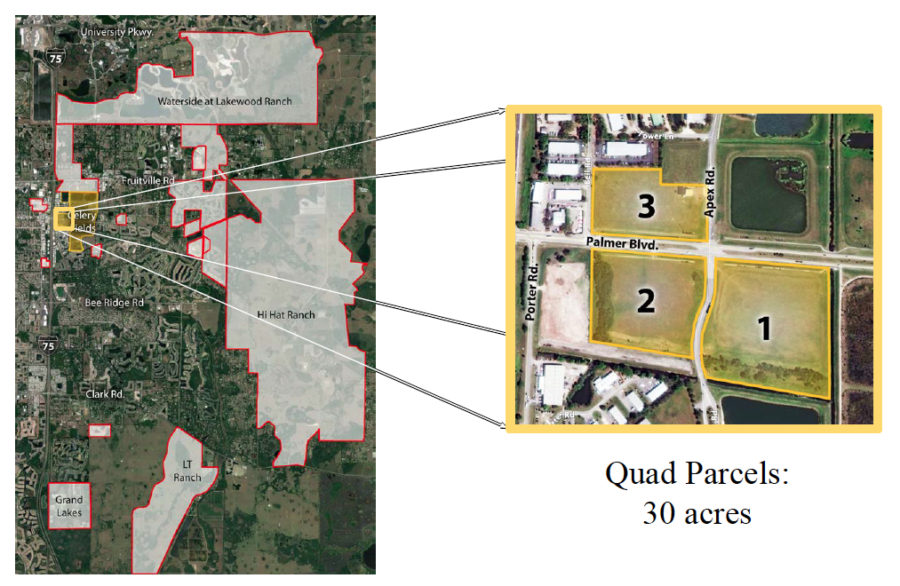
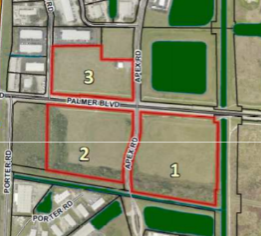
1. A consultant's recommendation to put an 80,000-square-foot industrial facility on public land a short walk from the Celery Fields will go to the Board of County Commissioners for discussion on Oct. 10. If the Board sees fit, the Lambert recommendation for rezoning Quad Parcel #3 could begin the public review process soon after. For the present, the Quad parcels at Apex Road and Palmer Boulevard remain in public hands.

Paley Park, NYC

2. A distinguished city planner talks about why she believes in the human importance of planning successful public spaces. "Communities can tell whether or not you understand their neighborhood," says Amanda Burden. "It's not something you can just fake."

3. Two long time citizen advocates urge a NO vote on a county-initiated amendment on the November ballot that would make it much more difficult in the future for voters to gather enough signatures to place a citizen-initiated Charter amendment on the ballot.

Please share this with your networks - our public lands, public spaces, and public voices are now at risk.

Consultant recommendation for Industry at Celery Fields goes on Board Agenda

County emails show that county staff has been working assiduously with Lambert Advisory, the consultant that recommended an 80,000 s.f. industrial facility as "highest and best use" of Quad parcel #3.

County staff has apparently accepted Lambert's recommendation to rezone parcel #3 for industrial uses, and the Lambert recommendation has been placed on the Board's agenda as a discussion item for Oct. 10.

If the Board approves, the recommendation to rezone parcel #3 for industry will go through the public process - neighborhood workshop, planning  commission, and final Board hearing. Fresh Start will attempt to keep the public advised.

A copy of the Lambert Report is here.

Fresh Start has noted that the instigation to hire a consultant to rezone parcel #3 came from Commissioner Al Maio. Two of the strongest supporters of industry for the Quad parcels #2 and #3 are James Gabbert and Robert Waechter. The Lambert assessment and follow-up rezoning could cost taxpayers as much as $61,290.

James Gabbert
Gabbert's proposal for a large open demolition waste crushing plant on parcel #2 caused a large public outcry in 2017, and it was defeated, 3-2 at the final public hearing 8.23.17. Commissioners Maio and Moran voted for Gabbert's proposed waste plant. Gabbert is still seeking to build a waste transfer operation on 6 acres immediately to the west of parcel #2 at Porter Rd. and Palmer Blvd.

Waechter, who owns several warehouses immediately to the south of parcel #2, has opposed the citizens' effort to keep the Quad parcels, which are public lands, from being sold to private industrial developers. At the Fresh Start presentation on 9.12.18, Waechter argued that as the area is already overridden with large semi-trucks, it should have more industry, not less.

Fresh Start, a citizens' group seeking alternative public uses for the Quad parcels, has noted several concerns with the Lambert Advisory recommendation:
  1. Commissioner Maio's initial reason for hiring the consultant for rezone was an alleged budget shortfall. He now says there are no shortfalls and that the County is in excellent fiscal condition.
  2. Lambert's methodology was skewed toward selling public land: it looked only at sales price, not at compatibility, community concerns, or trends of eco-tourism and residential development in the immediate area, approved by the County.
  3. If parcel #3 is rezoned for industry, it's likely that parcel #2 will follow.
  4. With rapid County approvals for over 22,000 acres of new housing development in East Sarasota, the additional population will need open space, parks, athletic facilities. The 30 acres of public lands at the quads are perfect for such use.
  5. Public lands should be used for beneficial public use, not be sold when they will only profit private industrial owners.

Saturday, September 15, 2018

Public space can shape the soul of a city

Amanda Burden, a famed city planner who contributed to Manhattan's High Line, talks about the value and importance of public spaces as well as the happiness bestowed by them.

"Public spaces have power," says Burden. "A successful city is like a fabulous party -- people stay because they are having a great time."

The trick, she notes, is to get outside the compulsion of the developer profit motive, and make the most of opportunities for the common good.

"Communities can tell whether or not you understand their neighborhood," she says. "It's not something you can just fake."

To make successful public spaces, more than professional skills are necessary.

"You don't tap into your design expertise," says Burden. "You tap into your humanity."


Friday, September 14, 2018

SNL: Fresh Start Initiative Leaders Plead for Commonsense Approach


Courtesy of the Sarasota News Leader


Subscribe to the SNL


Fresh Start Initiative leaders plead for County Commission to undertake commonsense approach to future planning around Celery Fields, making use of connectivity and recreational opportunities


Commission Chair Nancy Detert rebuffs group for criticism of board and talks of future lengthy discussion with staff about ‘Quads’ parcels

A graphic in the Fresh Start video shows the location of the Quads. Image courtesy Sarasota County

More than nine months ago, the Sarasota County Commission invited a community group to suggest proposals for how two county-owned parcels near the Celery Fields could be used.
The decision the board made on Nov. 28, 2017 followed an earlier months-long effort by community activists to protect those parcels from industrial development. In a 3-2 vote on Aug. 22, 2017, the majority of the board agreed that the internationally known Celery Fields might have started out as a county stormwater project, but it has become a major tourist draw, thanks to the hundreds of bird species that make it their home or just a stopover during migration.
Commissioners Paul Caragiulo, Nancy Detert and Charles Hines denied petitions submitted by Sarasota business owner James Gabbert to build a construction and yard-waste recycling facility on what is known as the “Southwest Quad” near the Celery Fields. Yet, it was Commissioner Alan Maio — who supported the petitions, along with Commissioner Michael Moran — who suggested on Nov. 28, 2017 that opponents of Gabbert’s proposal have the opportunity to explore the potential of both the Southwest and Southeast Quads in a manner that would be supported by the tens of thousands of residents in the area.
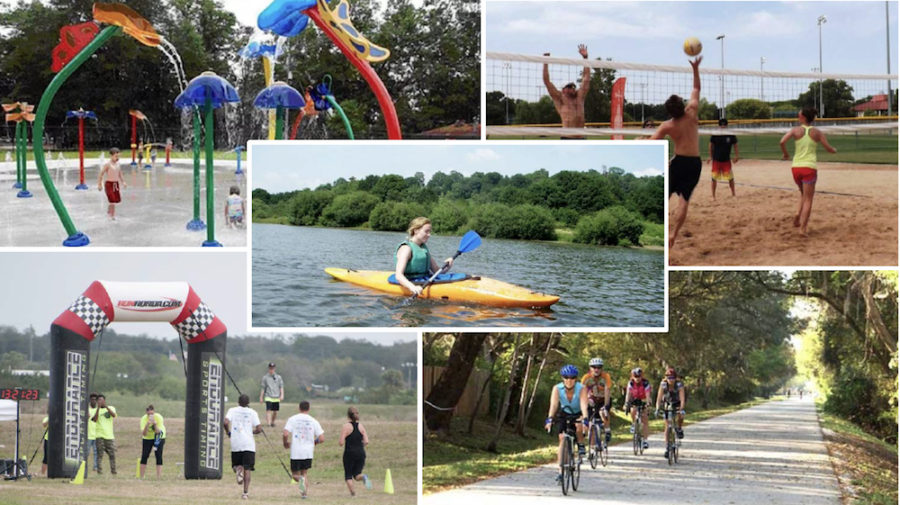
On April 25, the community group — the Fresh Start Initiative — offered preliminary suggestions. Members of the group’s Executive Council explained that the weighted voting system they used through months of meetings heavily favored an outdoor sports complex, which the Sarasota YMCA had proposed on the 10.6-acre Southwest Quad.
For the 12.7-acre Southeast Quad, they settled on a multi-use pavilion and a buffer/visitor center. As an alternative, they recommended an ecotourist lodge, perhaps with a restaurant.
The commissioners asked them to refine their proposals and present an update later this year.


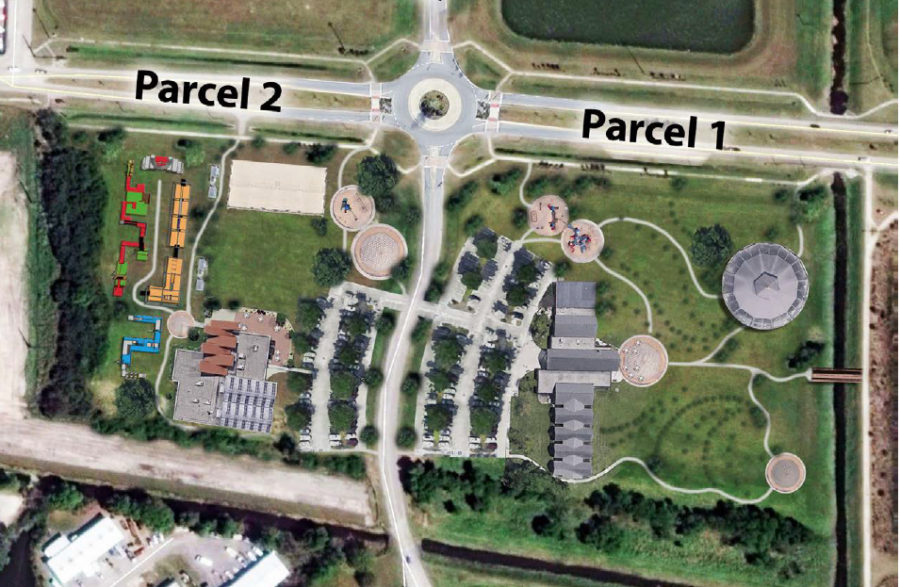
Graphics show potential uses on the two Quads. Image courtesy Sarasota County

That second presentation came on Sept. 12, following more months of reflection by Fresh Start members — which include representatives of 50 homeowner associations — on what they felt would be appropriate for the two Quads.
“We feel very strongly that the … Quads should be preserved as sort of a breathing area and natural element,” Executive Council member Carlos Correa told the board on Sept. 12.
“What makes you so eager to sell our public lands to industrial users?” Executive Council member Gary Walsh asked the commissioners.
A video the group showed the board noted twice that the county’s Future Land Use maps for the area had not changed in 1983, and those maps indicate industrial uses.
The Fresh Start group, Correa added, had considered the economic, social and educational opportunities “that could be nurtured” in proximity to the Celery Fields.
“We don’t need you to point out what’s going on out in the area or what we ought to be doing,” Chair Nancy Detert responded. “We charged you with visioning, dreaming, coming up with something exciting. … What I’m waiting to hear are ideas. The criticism, we’ve heard before.”
The 18-and-a-half-minute video provided examples of potential connectivity of the nearby residential and commercial areas — some still in the planning stages — to the Celery Fields. The narrator emphasized that more than 32,000 homes already have been approved on approximately 22,000 acres surrounding the Celery Fields.
The narrator talked of the multi-use building hosting workshops on environmental issues and art exhibits, for examples. Additionally, the Sarasota YMCA could use it for youth programs and classes.
The Southwest Quad — Parcel 2 — also could be the scene of rope courses and volleyball games, the narrator said.
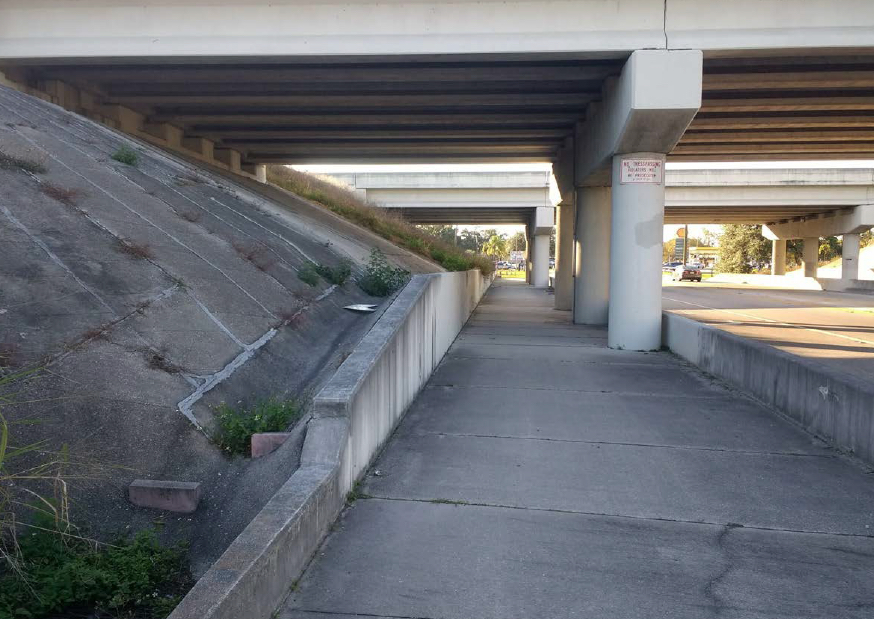
At one point, the narrator asked the board to “consider the unusual value offered by the Palmer Boulevard underpass, a precious walkable link” between the Celery Fields and businesses and restaurants on Cattlemen Road and on Palmer Boulevard, west of Interstate 75.


This is the Palmer Boulevard underpass, as shown in the video. Image courtesy Sarasota County
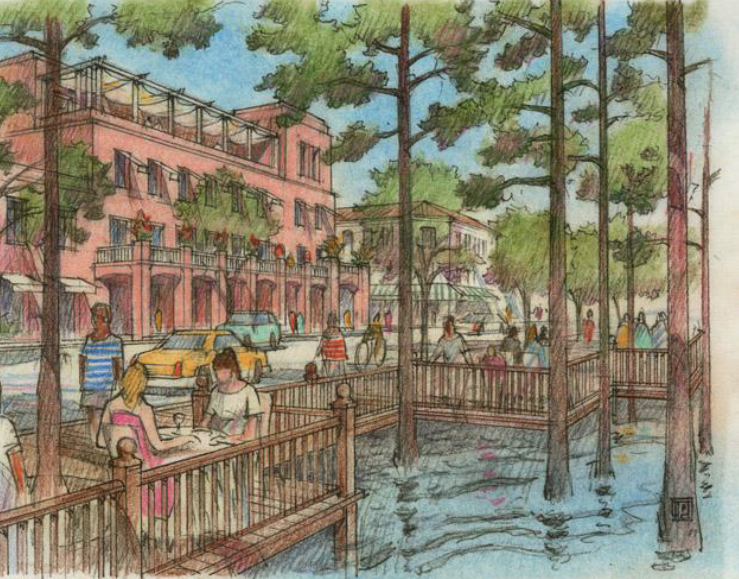
This is a depiction of how that underpass could be transformed. Image courtesy Sarasota County

With another slide, the narrator noted the potential of transforming a linear park on the north side of the Celery Fields into a “riverwalk,” a concept county leaders discussed in 2005, the narrator added.
At the very end of the presentation, the Fresh Start Initiative asked the commissioners to approve the following resolution that day: “That the Quads be dedicated to beneficial public uses in perpetuity; that uses for these lands be actively sought and formally approved only after community consultation and careful study of trending markets and beneficial opportunities has been completed to the satisfaction of all who care about the Celery Fields.”
The final slide said, “Keep the public in our public lands.”
“Thank you,” Chair Nancy Detert told the group.
“What we will do with the property will certainly not be decided today.” That would entail an extensive discussion, including staff information about the roads and other infrastructure in the area, she pointed out. “So we have a lot of work left to do …”
About that infrastructure …


This is a rendering of the ‘riverwalk’ proposal. Image courtesy Sarasota County

When Detert asked whether board members had any questions following the video, Commissioner Paul Caragiulo responded that he had a couple, but they probably would be more appropriate for staff.
“The major issue for me in this whole thing, if we’re being real transparent and honest about it,” Caragiulo said, “is that we have standards in place that … will really create a tremendous obstacle” to any future uses of the Quads. The primary obstacle, he added, is the timeline for any improvements on Palmer Boulevard, to facilitate extra capacity for traffic.
When Caragiulo asked about the tentative timeline for an upgrade of Palmer Boulevard, Matt Osterhoudt, director of the county’s Planning and Development Services Department, said he was unable to provide any information. Paula Wiggins, the county’s transportation planning manager, would have that answer, Osterhoudt added.
Caragiulo also talked of concerns about pedestrian safety in the area — an issue that Siesta Key resident Robert Waechter raised during the Open to the Public comment period at the start of the Sept. 12 meeting. Waechter owns industrial property near the Quads.
“This is fundamentally my big problem on this,” Caragiulo added, referring to the public safety issues related to the road network near the Celery Fields.


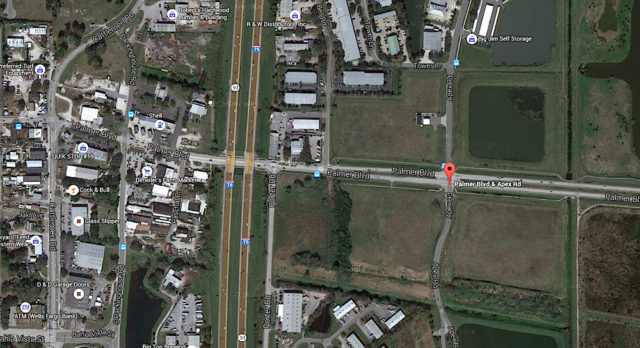
An aerial map shows the intersection of Apex Road and Palmer Boulevard in Sarasota County. Image from Google Maps

Osterhoudt told Caragiulo staff would be happy to offer any information the board members wanted.
“The purpose today,” Detert said, was for the Fresh Start group to provide more details about how the county could use the Southwest and Southeast Quads. “It was a beautiful presentation … a little short on details now and a little long on criticism, frankly. We already know the roads are overcrowded,” Detert added.
The Fresh Start group’s presentation followed a discussion of the results of the county’s 2018 Citizen Opinion Survey, which noted development and traffic congestion as major concerns of respondents. (See the related article in this issue.)
After the presentation
On Sept. 13, Tom Matrullo, a member of the Fresh Start Executive Council, provided The Sarasota News Leader a copy of comments he had written after reflecting on the previous day’s efforts.
Following the group’s initial presentation in April, he wrote — which members hoped would be the start of a collaborative dialogue — the council worked on additional market and demographic data and submitted that material to the county in July.
After a month, he said, the members had received no response from a staff member or a commissioner.
When they asked whether a response would be forthcoming, he continued, they were told that staff had scheduled their follow-up with the board as a discussion item on the Sept. 12 agenda. “Our attempt at dialog had apparently hit a wall,” he added.
As a result, Matrullo wrote, “We decided to address the larger question of planning, offering an analysis of this area as an example of why it’s necessary to plan proactively and carefully, rather than piecemeal and at random.


The Southwest Quad was the site of the proposed TST Ventures recycling facility. Image courtesy Sarasota County

Although the commissioners seemed displeased with the Sept. 12 presentation, he added — including references it made to the August 2017 public hearing on the construction recycling facility proposal — it offered “a holistic view, attempting to model the sort of approach needed to make the leap to a new view of East County.”
He concluded his comments with the following, “We believe that this conflict — between West and East Sarasota; between old industry and new opportunities near the Celery Fields, with eco-tourism blossoming and new communities running into tens of thousands of homesites — deserves nothing less than a deliberate honest dialog between the County and its citizens. We await the Board’s thinking on all these matters.”
Key points for the council


A graphic shows a variety of activities, making use of the potential connectivity from Benderson Park to the Celery Fields. Image courtesy Sarasota County

Before the Fresh Start group began its video on Sept. 12, Glenna Blomquist, another Executive Council member, told the commissioners, “We have so many wonderful visuals to show you today. This has really been a labor of love for us.”
The video narrator noted Fresh Start’s top four proposals for the two Quads, reprising ideas the group put forth in April:
  • A multi-use community facility, trails and a pavilion.
  • A birding lodge and restaurant.
  • A sports complex with a food truck area.
  • Boulevard-style shops, “fooderies” and affordable apartments.
Mote Marine leaders already are working with county staff on their proposal for a $130-million aquarium and science education center at Nathan Benderson Park, the narrator said. “Mote estimates its new aquarium will be visible to 43 million drivers a year [on Interstate 75],” the narrator continued.
At the next exit, “they’ll see the Celery Fields and the Quads, too. … Do we really want to allow industrial traffic to dominate this significant gateway?” the narrator asked.
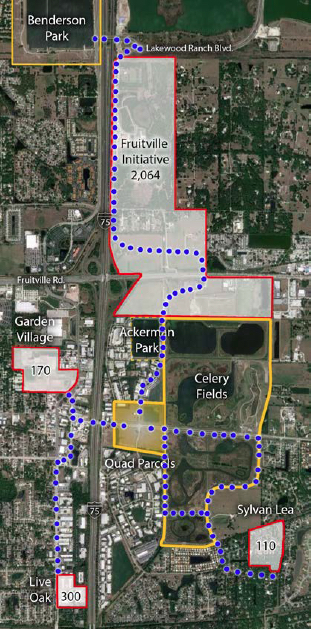
The video also showed graphics depicting the route of Lakewood Ranch Boulevard and the area of the Fruitville Initiative, where development is underway. The video emphasized the connectivity from Benderson Park to the Celery Fields.


A graphic shows the location of Lakewood Ranch Boulevard, the Celery Fields, the area of the Fruitville Initiative and locations of housing developments, with the numbers of homes indicated. Image courtesy Sarasota County

Yet, the narrator pointed out, “Developer proposals are lining up rapidly and at random” for the eastern part of the county. Fresh Start is offering “commonsense recommendations” as alternatives, the narrator said.
The video included a quite from Peter Drucker, who called himself a “social ecologist”: “The greatest danger in turbulent times is not the turbulence, but to act with yesterday’s logic.”

See also: The goal is to maintain a welcoming place (guest editorial by Tom Matrullo)
Fresh Start for the Celery Fields (blog): Video of 9.12.18 Presentation


Thursday, September 13, 2018

Waechter: Trucks before Community

Before the presentation given by Fresh Start to the Board of Sarasota County Commissioners on Wednesday, Sept. 12, Robert Waechter told Sarasota County officials that large trucks are incompatible with pedestrians, and therefore should rule out community uses on 30 acres of public lands near a valued bird sanctuary and public recreation area.

Waechter, an influential political operative and owner of industrial warehouse properties next to Quad parcel #2, addressed the Sarasota Commission on Sept. 12, 2018.


The semi-truck traffic Waechter alluded to occurs on thin, fragile Apex Road, which runs North/South and connects the Celery Fields to Fruitville Road.

The presence of these large trucks is "incompatible" with uses that draw residents, children and tourist-visitors, Waechter said. Noting that the area is hazardous to pedestrian traffic now, he added, "It's going to get worse," because, apparently, more industrial development will be coming in.

Waechter and his friend James Gabbert are among those most resistant to the changes occurring around the Celery Fields -- changes which, due to an absence of proactive planning, has led to the simultaneous development in the same area of industry and residences, along with schools, a park and recreational uses. This has led to a clash of two distinct visions of the area.

In their presentation, Fresh Start noted that the County has approved new housing within easy walking distance to the public lands, which are adjacent to a large open bird sanctuary, a rare (for Florida) plateau, wetlands and recreation area.

With 2,500 new homes approved within walking distance of the Celery Fields preserve and recreation area, the County had a rare economic opportunity to create a walkable, community friendly area on the public properties, the group said.


With all the new homes, walkability in this area will become a much-needed, even essential asset, the group said.

Waechter, a former head of the Republican party in Sarasota County, Florida, has used money and connections to stuff government boards such as the Charter Review Board with developer and business associates. He has opposed advocates of using public lands for the community, and has advocated that the County sell the public lands to a private industrial developer such as himself.

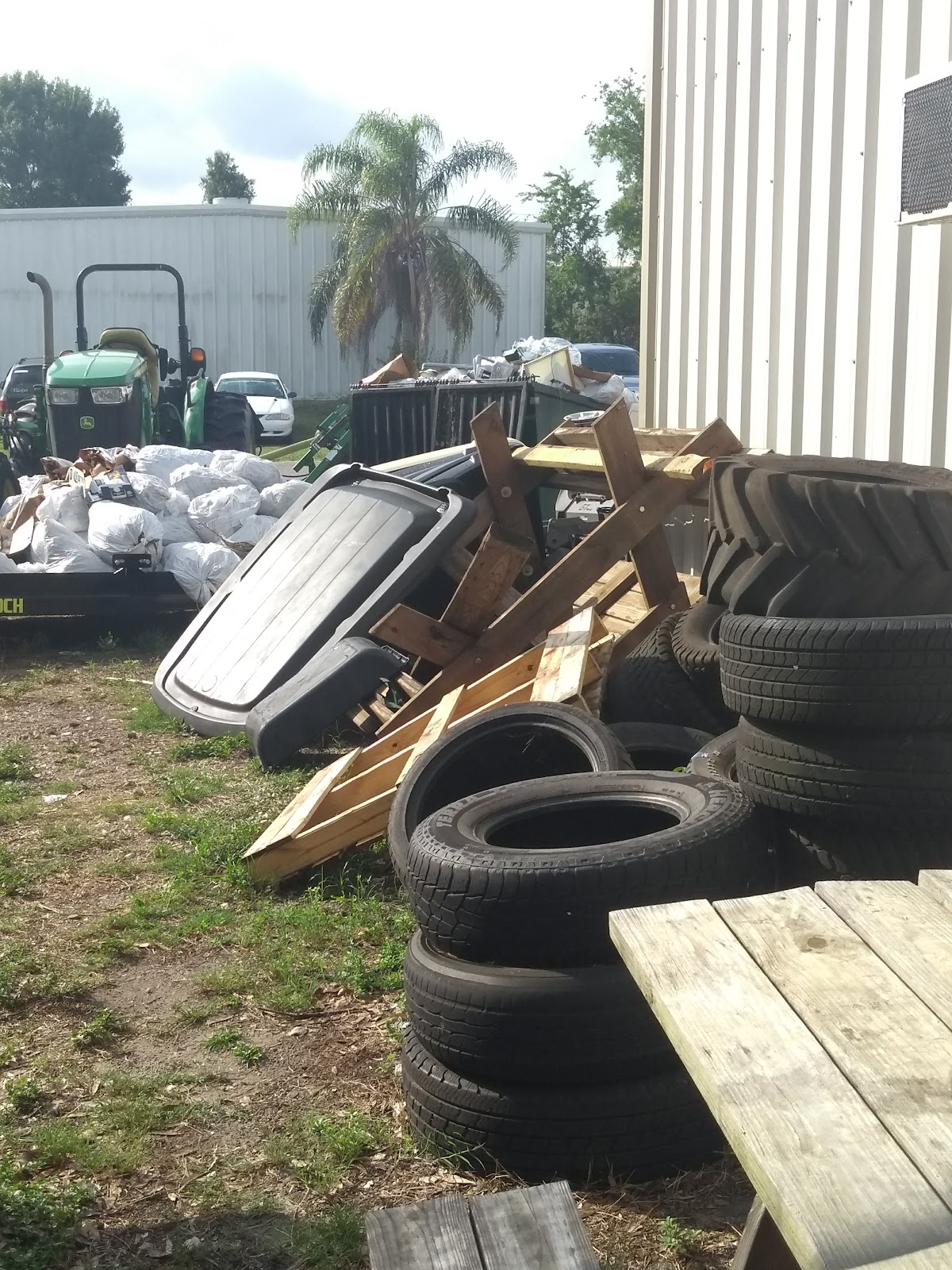
Here's a photo of Mr. Waechter's nearby warehouse property on a recent day:


With new homes, and a new park and recreation area, such tensions with older industrial uses is inevitable. Which is why the Fresh Start group offered a recommendation for future planning in Sarasota County:
"We assert the people’s right to a vigilant public stewardship that addresses private development within a higher mandate: to raise the quality of life for all."
The conflict has come about as the county has abdicated any role as steward of lands, especially the public lands, says Fresh Start, adding:
The conflict between older industry and new opportunities near the Celery Fields, with eco-tourism blossoming and new construction running to tens of thousands of homes and apartments, deserves nothing less than a deliberate honest dialog between the County and its citizens. 
Fresh Start's presentation:


Thursday, September 6, 2018

Two Reports: Fresh Start and Lambert

A land use consultant hired by Sarasota County to rezone a portion of public land near the Celery Fields sanctuary has recommended that the 7-acre parcel be sold to an industrial developer.

“In sum, the highest and best use of the subject property is considered to be for industrial development, with an estimate land evaluation of roughly $1.3 million; or, $3.40 per square foot,” writes Lambert Advisory LLC in its report to the county.
Note: On Wednesday, Sept. 12 at the County Commission, Fresh Start will present an analysis in support of a resolution to dedicate all three public parcels to public benefit. The estimated time is 9:30 a.m. Agenda.
Quad parcels at Apex & Palmer
Lambert filed the report on August 22, 2018. The Miami firm was hired by the Board of Sarasota County Commissioners on the premise that current budgetary shortfalls needed to be made up through the sale of public lands. Since that meeting, the Board has appeared to revise its estimate of the county’s financial plight. Commissioner Maio, who initiated the rezone decision, now says that the county coffers are full, its fiscal condition is solid, and there will be no shortfalls in 2019 or 2020.

The county agreed to pay Lambert $61,290 to rezone Parcel #3, at the Northeast quadrant of Apex Road and Palmer Boulevard. The analysis, called a “highest and best use” report, compares the parcel to existing properties in Sarasota for possible residential, retail, office, industrial or hotel uses.

Highest and best use” (HBU) is a method of assessing real estate that looks solely at monetary value. Other considerations of use value such as environmental, recreational, social or economic opportunities are specifically excluded in HBU studies.

A coalition of 50 neighborhoods which has sought to persuade the County to dedicate three parcels at the same intersection, including parcel 3, for community uses -- is concerned that the Lambert study could sway the five-member commission to approve the sale not only of the seven-acre parcel #3, but also to rezone parcel #2, 10.6 acres, for private industry.

”It’s like a chess game,” said Glenna Blomquist, a member of Fresh Start, the HOA coalition. “If the county accepts this report, it can proceed to rezone parcel three without even having identified a buyer."

Once the land is rezoned, any private developer whose industrial operation fits the zoning can buy the property and build without public input. Last year, a giant warehouse operation sought to purchase parcel #3, and hundreds of Sarasotans came out to oppose it at a public hearing.

“With the property already rezoned, an industrial developer whose proposed use fits within the new zoning would simply by-pass the community,” says Blomquist.

There’s a further danger lurking in this chess match, notes Gary Walsh, president of the Meadow Walk, the nearest community to the Celery Fields. After parcel #3 is rezoned to industry, developers can argue that parcel #2 should also be industrial, because at that point it will be enveloped by industrial zoning on three sides.

Parcel #2 is the 10.6-acre parcel which the Fresh Start group was charged by the Commission to find community-approved conceptual uses for. The group filed a report with those proposed uses in April, and at the Board's request, updated it in July.
“Developers seeking industry here have usually ignored the issue of compatibility, but now it could work in their favor,” adds Fresh Start’s Carlos Correa.

Here's how it could go:
Waechter warehouse
Just to the south of parcel 2 (separated by water and trees) are several warehouses owned by Robert Waechter, who has actively opposed Fresh Start’s efforts to have the County dedicate the land to community uses -- athletic fields, a restaurant or cafe, shops, affordable housing, meeting rooms, a historical museum exhibition space.

West of parcel #2 separated by trees is a six-acre parcel owned by James Gabbert, who plans a waste transfer station there. Gabbert last year proposed to put a giant waste processing facility on his six acres plus the 10.6 acres of parcel #2.

Hundreds of residents and visitors who value the Celery Fields turned out to the Aug. 23, 2017 hearing in vehement protest, and Gabbert’s petition met with defeat.

Fresh Start says it will be taking a closer look at data in the Lambert report -- figures used for land value, population growth estimates, traffic and more.

“Our analysis was completed before we saw the Lambert report, and takes a completely different approach” says Tom Matrullo of Fresh Start. “We begin by looking at the land itself, at the community with whom we've consulted, at market trends, and at potential synergies with neighborhoods, commerce, and eco-tourism -- the Celery Fields has been a place of respite from the Red Tide we've recently experienced along our coastline."

The basic question of land use goes beyond data to a more fundamental question: how does Sarasota County plan? Fresh Start puts it this way:

"On one hand, you have a corporate analysis that looks only at money, and by design ignores everything our residents care about; on the other, you have everything our residents care about: the environment, community resources, things for children to do, social and educative activities, clean air, recreation, healthy birds, manageable traffic, and the benefits of a thriving tourist area."

On Wednesday, Sept. 12 at the County Commission, Fresh Start will present an analysis in support of a resolution to dedicate all three public parcels to public benefit. The estimated time: 9:30 a.m. The public is welcome, but as this is not a hearing, public input will be limited to 3 minutes before or after the morning agenda, in the segment known as "Open to the Public."

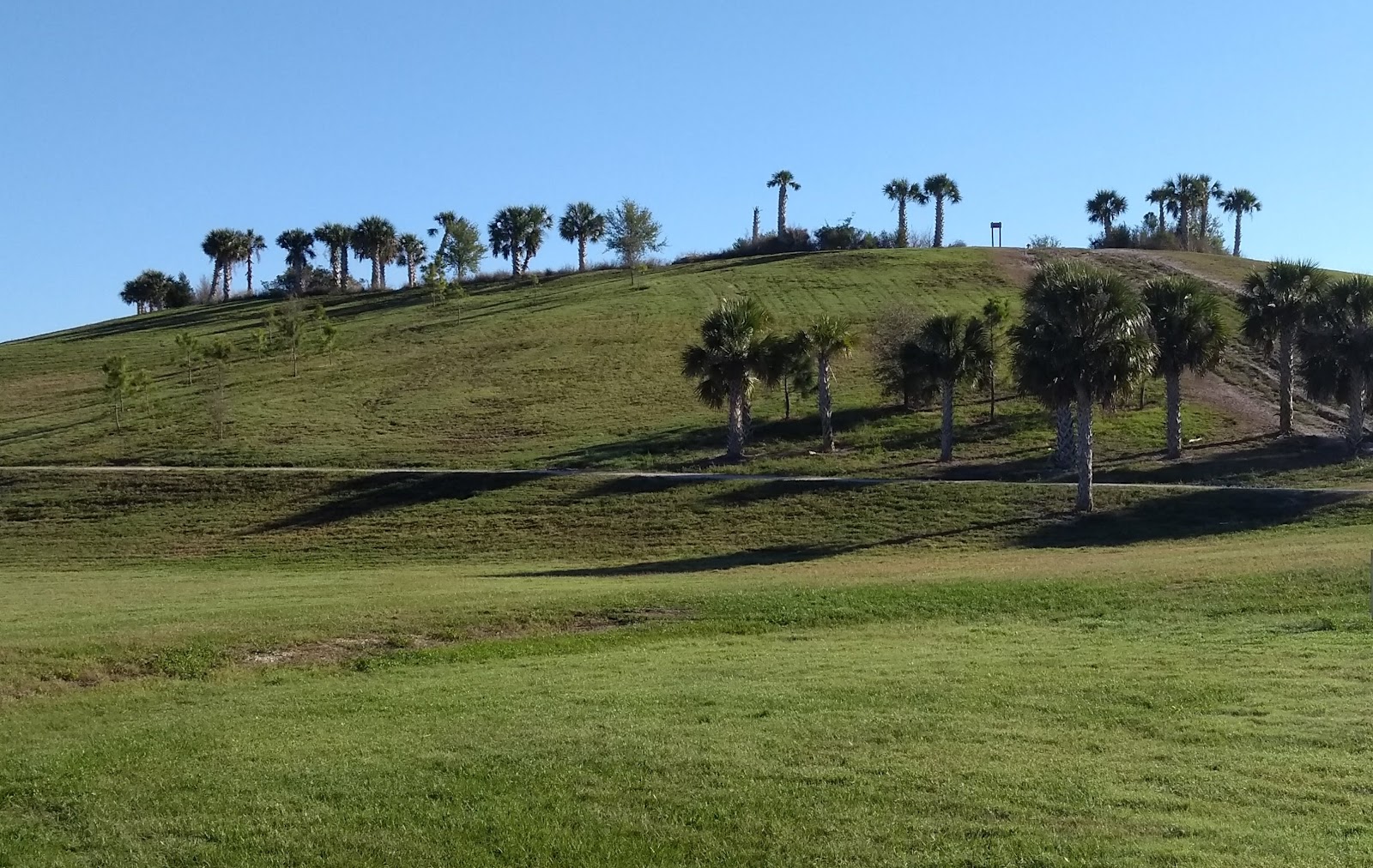
Mt. Celery

Wednesday, September 5, 2018

State Rep Forum at CONA Sept. 10


CONA logo graphic
Sarasota County Council of 
Neighborhood Associations - CONA


         - monthly meeting -

      MondaySeptember 102018


candidate forum


state
representative

     
  All candidates competing on the general election ballot for our state representative districts have been invited to participate in the CONA forum on September 10, 2018. The forum will be divided into two panels.
           
  The first panel will combine Tracy Pratt and Will Robinson of the district 71 race with Margaret Good and Ray Pilon of the district 72 race. 
          
  The second will combine Liv Coleman and Tommy Gregory of the district 73 race with James BuchananRobert Samuel Kaplan, and Tony Mowry of the district 74 race 
    
  Written questions may be submitted in advance or at the meeting to be included, as time allows, following the questions posed by our moderator.  

     
  Candidates appearing on our ballots for any races are welcome to attend the social before the meeting in order to make contact with voters and to distribute literature and yard signs, even if not scheduled as a member of a panel for the forum. Information about ballot initiatives appearing on the ballot also may be provided to inform voters. 
              
  The meeting will open with brief neighborhood updates about their issues, including Chris Bales on Arbor Lake PreserveBen Cannon on Bath and Racquet ClubSura Kochman on Siesta Promenade, and Tom Matrullo on the Celery Fields.
                                                                         
  See www.conasarasota.org/meetings.html for more information.
               
social 6:30 p.m. -  meeting 7:00 p.m.

        
neighbors helping neighborhoods since 1961
                      
anniversary party  -  honoring John McCarthy  -  November 5, 2018
make your reservation at the meeting
ticket purchase 
information is on the 'contact us' page of our web site

   
CONA meetings are free and open to the public as well as members of the more than seventy associations the organization represents and its individual members. Unless otherwise noted, the meetings are held at the Sarasota Garden Club, 1131 Boulevard of the Arts in Sarasota, which is at the intersection of Tamiami Trail, south of the Municipal Auditorium. Parking and the entrance are reached from Van Wezel Way. Socials precede the meetings at 6:30 p.m., the meetings begin at 7:00 p.m.  
                   
For additional information about CONA and our schedule of upcoming meetings, 
please see the CONA web site

copyright © 2018 Sarasota County Council of Neighborhood Associations 
all rights reserved