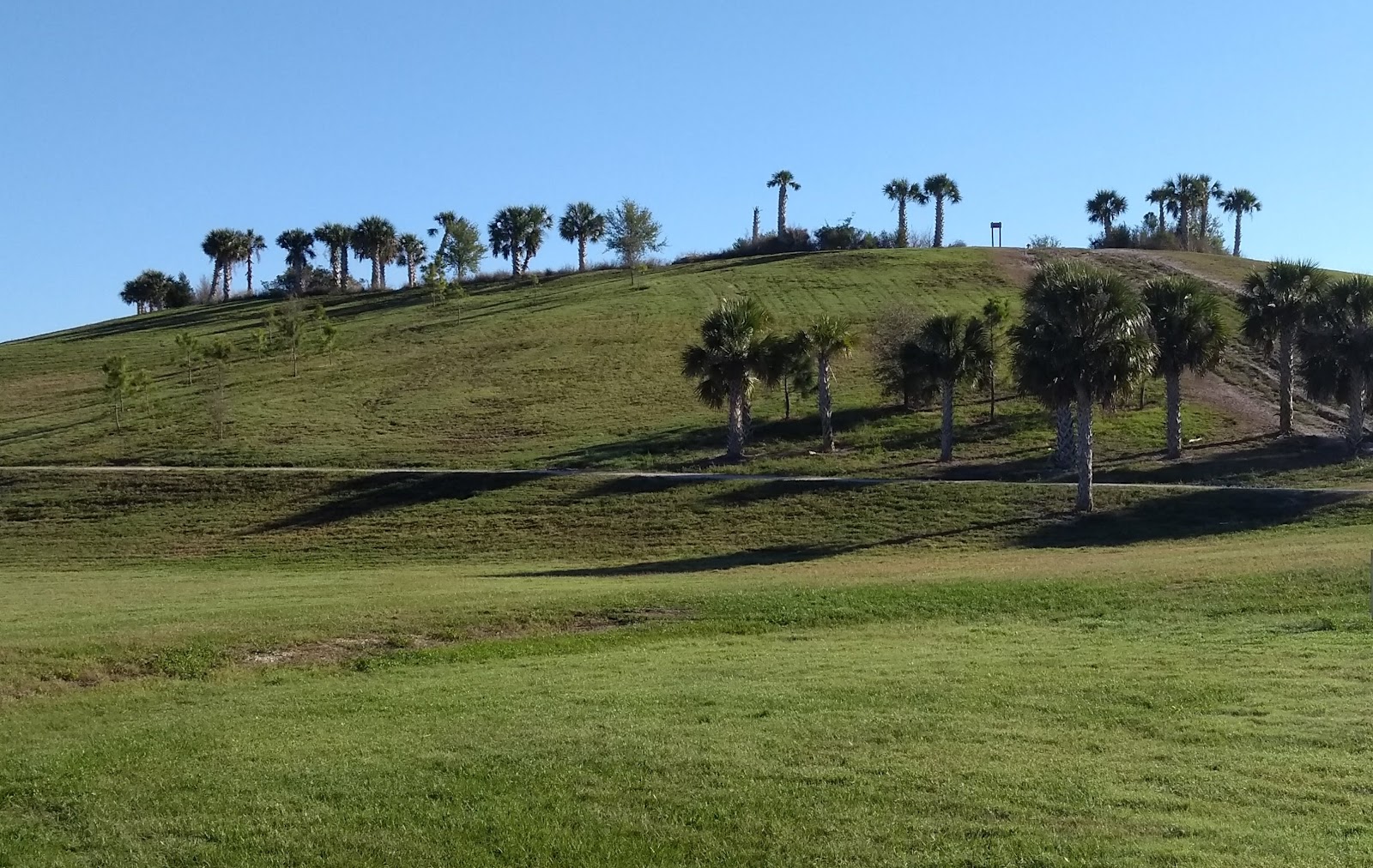
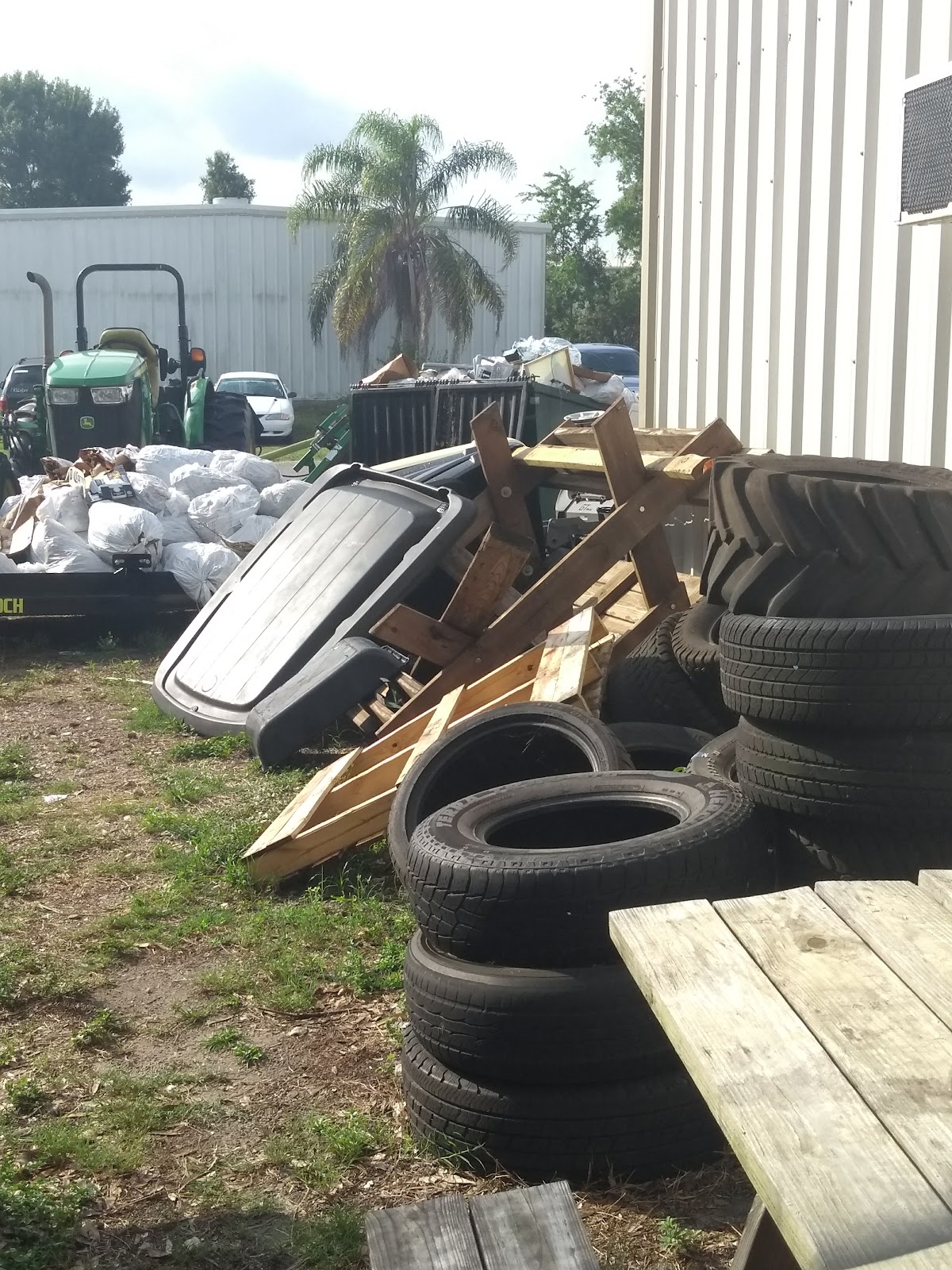
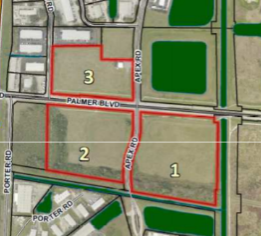
The Sarasota County Planning Commission is set to consider the county's proposed Critical Area Plan (CAP) for the area that includes the Quad Parcels and Celery Fields on May 6, 2021.
The plan proposes rezoning the Quads to Government Use (GU) and delineates constraints and recommendations to preserve the aim of encouraging birding habitat and an open gateway on Palmer Avenue to East County.
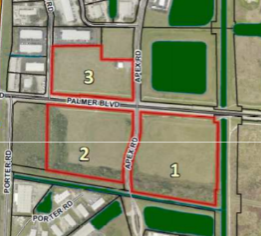
County Planner Steve Kirk put a lot of thought into this presentation, which seeks to honor the intent behind the county's grant of a permanent easement over three of the four parcels (outlined above) to the Conservation Foundation of the Gulf Coast and to Sarasota Audubon, which has had s strong commitment to the Celery Fields, and which will manage the future redevelopment of these parcels.
Here's my email to the Planning Commission:
As one of the founding members of the Fresh Start Initiative, a community group that spent 10 months gathering community input and recommendations for the Quads parcels, I invite the Planning Commission to now weigh in on the CAP as it now stands.
1. The Critical Area Plan seeks to realize the vision of a Gateway to East County, with an open viewshed, new Audubon-guided bird habitat, and stresses compatibility of architectural style, setbacks, building height, and more. However, while these constraints will certainly enhance the three parcels under easement, the Northwest Parcel has 4+ acres of developable land that will simply be labeled GU. This acreage could be developed by the County or sold to a developer, with options for light industry, commercial, or residential uses.
Wide range of options for the NW Parcel
It would make perfect sense for the Planning Commission to strongly recommend that the NW parcel's 4+ developable acres have binding language stating that any proposed use must be found compatible with the larger vision for the Quads and Celery Fields Area.
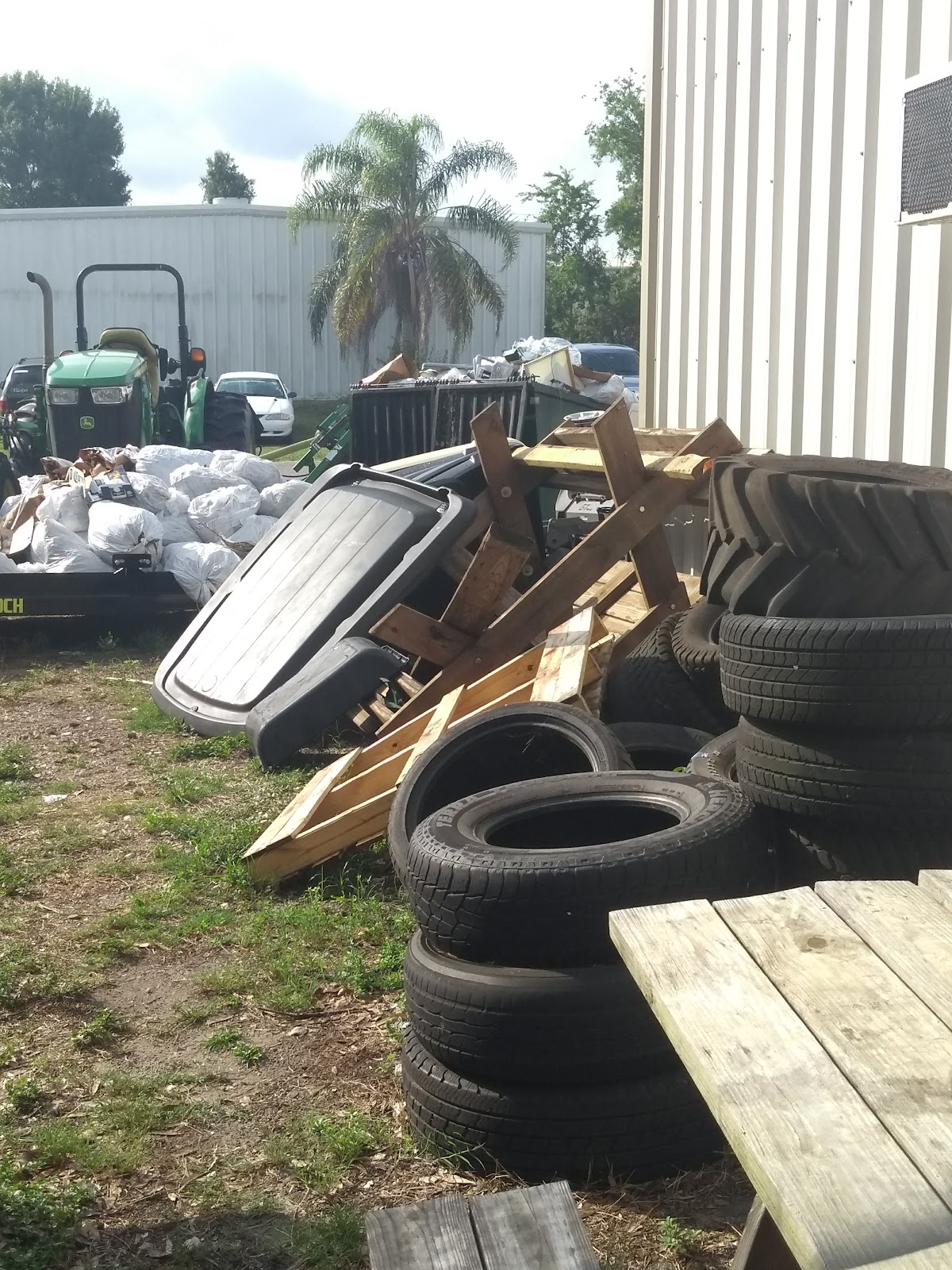
For example, a four-acre warehouse serviced by giant 18-wheelers on the Northwest parcel would hardly be consistent with the purpose of the perpetual easement, or for that matter with the roads and residential neighborhoods on and near Palmer Blvd.
The Fresh Start group did present a few community suggestions for the Northwest parcel. One that would both be consistent with the easement vision and offer practical help to motorists would be a bus loop enabling schoolchildren to get on and off buses without stopping traffic both ways on Palmer.
The loop could have a pavilion with tables where children could sit out of the rain or strong sun, and perhaps eat a snack. Snacks could be provided by a rotating series of food trucks on an area set aside for this purpose.
Not only would this use be an asset for our children and help the flow of traffic, but it would also fit with the fact that the Northwest parcel, as public land, already holds a brand new fire station in suitable Old Florida style.
2. Another noteworthy element of the permanent easement reserves an option that would allow the County to construct a building on six acres of the Southwest parcel. While the Board has spoken of using the land for a history museum, nothing in the CAP specifies this use. This would seem to leave open the parcel open to some other Government Use.
GU allows a great many things, including firing ranges, bus terminals and asphalt manufacturing. It would be a valuable enhancement to the Planning Commission review to recommend binding the use of the Southeast parcel to consistency and compatibility with the "Prime Directive" of the permanent easement -- protection of bird habitat in the Celery Fields.
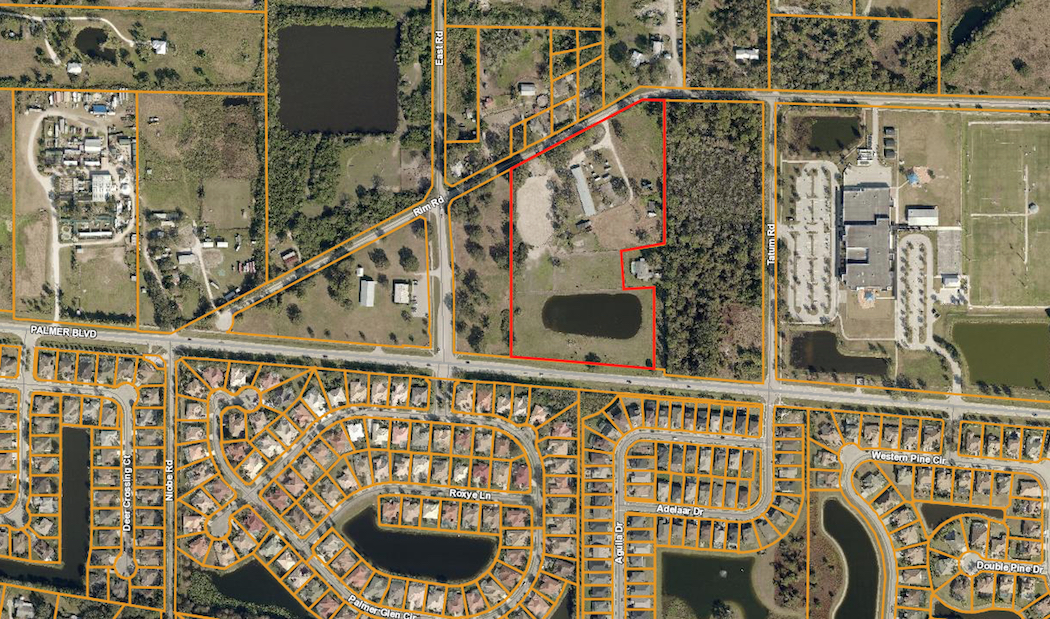
An aerial map shows the location of Graceland Ranch, outlined in red, just west of Tatum Ridge Elementary School. Image from the Sarasota County Property Appraiser’s Office
As debate continues at the Sarasota County Commission dais about the future of county property adjacent to the Celery Fields, the Conservation Foundation of the Gulf Coast is at work on an initiative to create a Rural Heritage Conservation Area in the same vicinity.
A big key to the nonprofit’s plan is the proposed acquisition of a 23.4-acre parcel located off Palmer Boulevard, east of the Celery Fields.
In a June 12 telephone interview with The Sarasota News Leader, Christine Johnson, president of the Conservation Foundation of the Gulf Coast, explained that it had only been a week since the nonprofit had launched its campaign to raise a total of $2,550,000 to buy the privately owned property known as Graceland Ranch.
Residents of the community approached the Foundation, she said, asking, “‘Is there anything you can do?’” They had learned that developers were interested in the Graceland site, Johnson continued, and they wanted to see it remain in a natural state, in keeping with the Celery Fields.
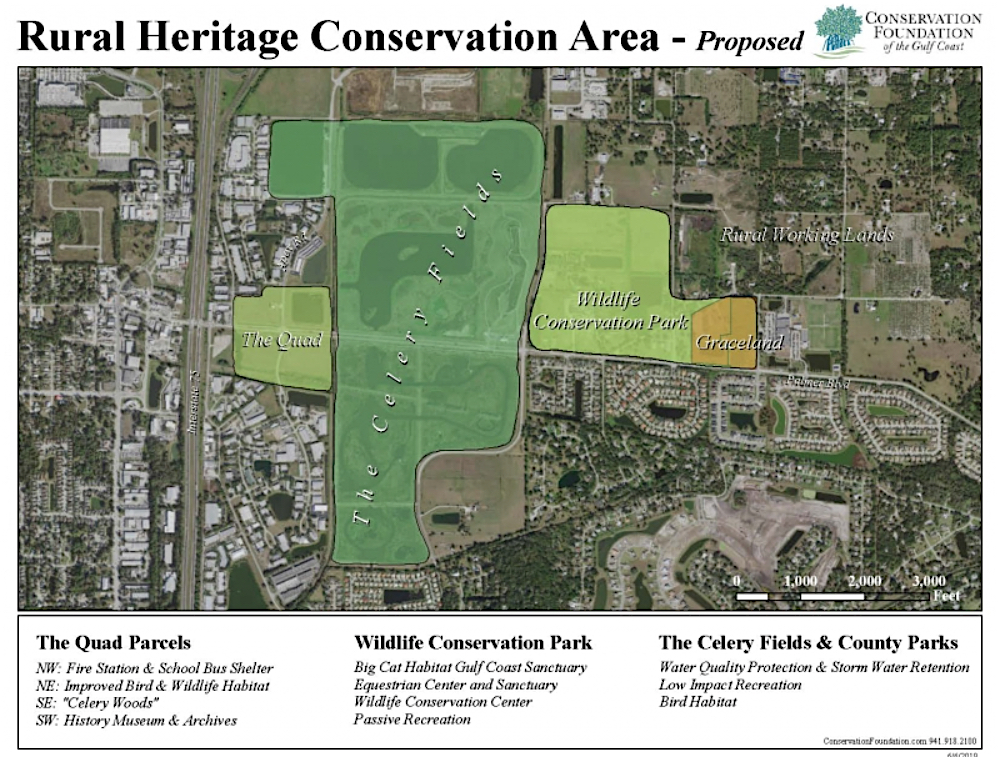
“Graceland is the linchpin to establish a 140-acre wildlife conservation park within a 1,300 acre rural heritage area,” the Foundation says on its website. The property “already is contributing to our community’s quality of life. Graceland provides habitat for wildlife in forested wetlands as well asrecreational opportunities like therapeutic horseback riding and outdoor activities for our youth. This rural heritage area serves as an attractor for visitors and as an amenity for those who live, work and play in Sarasota and Manatee Counties.”
This graphic shows the Rural Heritage Conservation Area the Conservation Foundation of the Gulf Coast envisions with the Graceland Ranch property, Big Cat Habitat, the Celery Fields and the county’s ‘Quads’. Image courtesy Conservation Foundation of the Gulf Coast
The Facebook page for Graceland Ranch notes that the property is located at 7360 Rim Road in Sarasota, just west of Tatum Ridge Elementary School.
Johnson told the News Leader that the Foundation began negotiating with the owner of Graceland Ranch about two months ago. Information the Foundation had received, she said, indicated that two different developers were interested in the land, “nibbling around the edges.” One of those, she continued, seemed pretty serious about constructing approximately 40 homes on the site, even though the land is not zoned for such development.
(The Sarasota County Property Appraiser’s Office says the land is zoned Open Use Rural (OUR). The county’s zoning regulations explain, “The OUR District is intended to retain the open character of the land. This district is further intended for agricultural purposes and uses, and to preserve lands with agricultural development potential. Agriculturally-oriented residential development is encouraged, and all commercial and industrial development is prohibited. … Permitted uses are limited to conservation, agriculture, very low density residential development, recreation, and with certain limitations, other uses that are not contrary to the open character of the district.”)
The owners of Graceland Ranch chose to accept the Conservation Foundation’s offer of an option to purchase the site, Johnson said. Still, she stressed, “It’s really going to be a matter of whether the community wants to save this piece of property.”
The Foundation website makes it clear that the nonprofit needs $650,000 in donations by June 30, with another $650,000 due by Sept. 30 “in order to meet our contract deposits, demonstrate community support, and keep this opportunity, this one-time chance, alive.”
Any person interested in helping with the acquisition can click on a button on the Conservation Foundation website and go directly to a webpage offering a series of steps for making a contribution.
This is part of the webpage that allows an person to make a contribution to the Graceland Ranch acquisition fund. mage courtesy Conservation Foundation of the Gulf Coast
Gifts are tax-deductible, the webpage points out.
‘We save the land’
During the June 10 meeting of the Sarasota County Council of Neighborhood Associations (CONA), Debi Osborne, director of land protection for the Conservation Foundation, sought support for the Graceland initiative.
“We save land,” she told the audience members. “We save it forever.”
In the case of Graceland Ranch, she continued, Foundation staff members are working “with willing sellers who are interested in conserving their land …”
If the Foundation is successful in acquiring the property, Osborne continued, “That would then hold the line for the type of more high-density development that’s south of Palmer [Boulevard].”
“We see this as a community effort,” she added.
Sarasota Audubon leaders also are encouraging the public to help save Graceland Ranch from development.
Christine Johnson. mage courtesy Conservation Foundation of the Gulf Coast
An email blast they sent out on June 7 said, “To all Audubon members and those who cherish retaining as much of our environmental lands as we can, the Conservation Foundation of the Gulf Coast is taking the lead in protecting the lands east of the Celery Fields. This foresighted move is in addition to the conservation efforts by Sarasota Audubon, Fresh Start and all residents around the Celery Fields with regard to the [Quads] … If successful, imagine the scope of the protected lands around the Celery Fields! This would ensure a safe environment for the 246 species of birds, as well as all other forms of wildlife in the area. It’s a must for us all to help right now.”
The email encouraged people to donate to the Foundation.
The Fresh Start group mentioned in the Sarasota Audubon email is the same organization that worked with county staff last year — with the support of the County Commission — to propose potential passive uses of the county’s four Quads parcels next to the Celery Fields. Comprising representatives of 50 homeowner associations in the area around the Celery Fields, the Fresh Start Initiative sought to convince the commissioners to focus on long-range planning for the Quads that would be compatible with the Celery Fields, which has become an internationally known bird-watching destination.
Nonetheless, on June 4, commission Chair Charles Hines brought up the prospect of the board’s selling the Southwest Quad to any developer who would be willing to create an affordable housing project on the site.
A Fresh Start blog this week noted both the Conservation Foundation efforts and the County Commission discussion last week. The Foundation’s plans, the blog pointed out, would ensure that Graceland Ranch “would receive a conservation easement barring development in perpetuity. The land could be dedicated to equestrian uses benefiting the public: riding, hippotherapy, school visits, education, and more, says [Foundation President] Johnson, who noted that several schools are nearby,” including not only Tatum Ridge, but also Fruitville Elementary, McIntosh Middle and the Farm School.
The blog added, “The Foundation is advocating uses in keeping with the trends and surrounding human communities, integrating a long-range vision of a lasting rural heritage and wildlife conservation for future generations.”
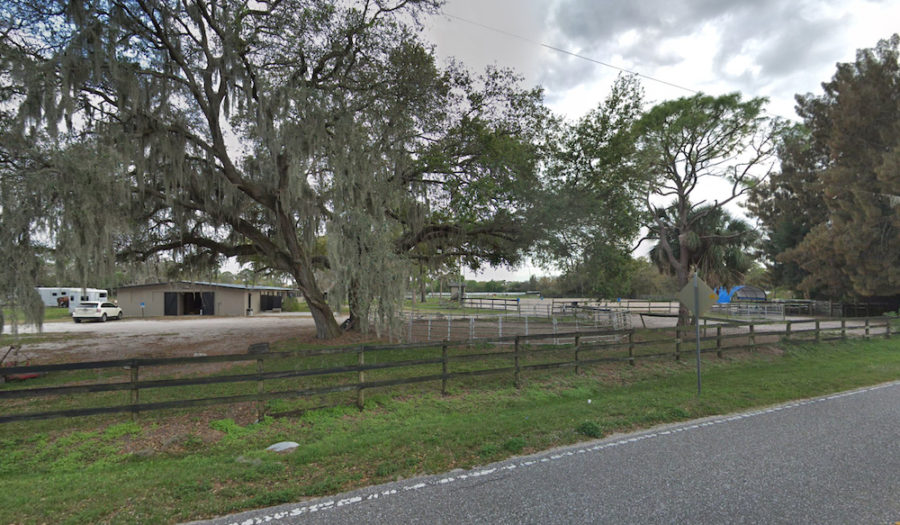
This is a portion of Graceland Ranch. Image from Google Maps
Conversely, the blog says, “[W]hile affordable housing is indeed a goal … Mr. Hines is promoting a quick fix to motivate the private construction of less costly housing, apparently without regard to how such an initiative would impact a host of significant social, environmental, economic and infrastructural concerns in a complex, radically changing area.”
Fresh Start also is encouraging people to contribute to the acquisition of Graceland Ranch.
What can we learn from the processes that led to James Gabbert having the county's blessing to build a waste transfer facility in the wrong location? How can we do better next time?
Gabbert buys and receives special exception for Waste Transfer Facility (WTF)
April 1, 2015: Deed of purchase of six-acre transfer site: Shows that Gabbert's TST Ventures paid $100,000 for the parcel. The Appraiser shows the same property had previously sold on Sept. 2, 2004, for $840,000.
Gabbert Timeline The parcel Gabbert purchased did not allow heavy industry. He and Bo Medred had to ask the Board for a Special Exception. The Timeline show how Sarasota county bent rules, created special exceptions, and paved the way for Gabbert to operate a full, open-air Waste Processing Facility on 16 acres, including a 10.6-acre parcel of public land. Only the public outcry on Aug. 23, 2017 stopped this from happening - and even then, Commissioners Al Maio and Mike Moran voted for the Waste Processing proposal.
"I am watching everything I loved about Sarasota being destroyed by people who are supposed to represent me. This may be one of the more overt examples of putting personal gain over the voices of the people and protection of one of the only sacred spaces left in SRQ."
"I seriously doubt that millions of dollars are being spent to attract tourists to our area so they can witness poor planning. Sarasota is rapidly turning in to the butt of an series of man-made and politically generated disasters. We have a plastic candy cane sewage system which is decades behind where it should be, adding to the pollution in the Gulf; are experiencing over-building which is having a negative impact on existing property; we’re ignoring infrastructure such as maintaining roads, monitoring and controlling traffic flow; avoided the politics of red tide until it became one of the most costly and devastating events our area has seen. And yet, you see fit to approve a noisy, toxic, airborne and ground water pollution-generating, debris center earmarked ‘light industrial’ near a beautiful watershed filled with wildlife and those who are seeing a tiny bit of nature in this rapidly 'pave paradise' world . . .."
"Any commissioner who received $$ from Gabbert, directly or indirectly, is compromised and should have not voted on this issue in the first place."
Sample of Gabbert contributions to Al Maio's campaign 2014
Relevant Laws
Federal and County efforts to restrain blight along the highway include:
Did the Board-appointed Planning Commission or the Board itself direct staff to look at best practices in the field of waste management to mitigate the impacts of a WTF near the highway and a celebrated Nature Area? No.
What was possible? Here's a Waste Transfer Station in Seattle creatively designed to reduce noise, odors, and visual impacts -- it even includes a playground.
An alternative vision
Beginning in December 2017, a group of citizens representing 50 HOAs sought to show the Board a better vision for the Quad Parcels next to Gabbert's WTF. The group, called Fresh Start, reported its work here.
Board voted to proceed with new Critical Area Plan for the Quad Parcels. The Board might seek to use this process to rezone the public Quad parcels for industrial use. The public voice might again be the only voice speaking for rational, environmentally sensitive uses that benefit our communities.
The Critical Area Plan process for the Quad parcels will include a public meeting, probably in mid-May. Anyone can be added to the notification list by simply asking - write to SKirk@scgov.net - that's Steve Kirk, the lead planner for the Quads Critical Area Plan.
Opponents of project could pursue petition process for a new public hearing, county staff says
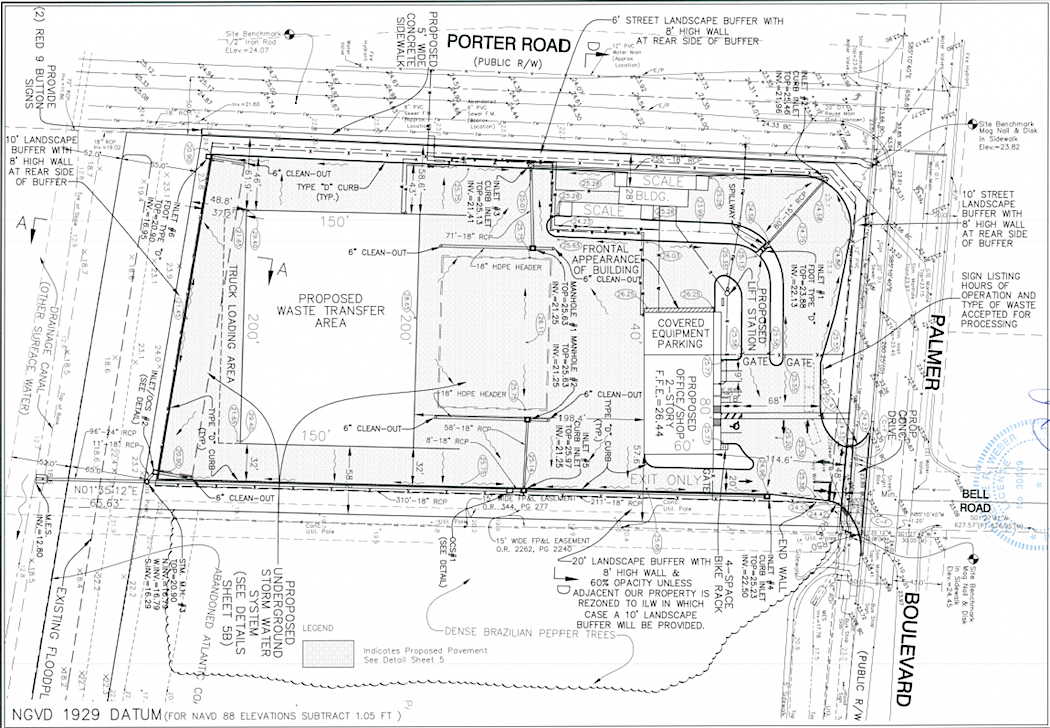
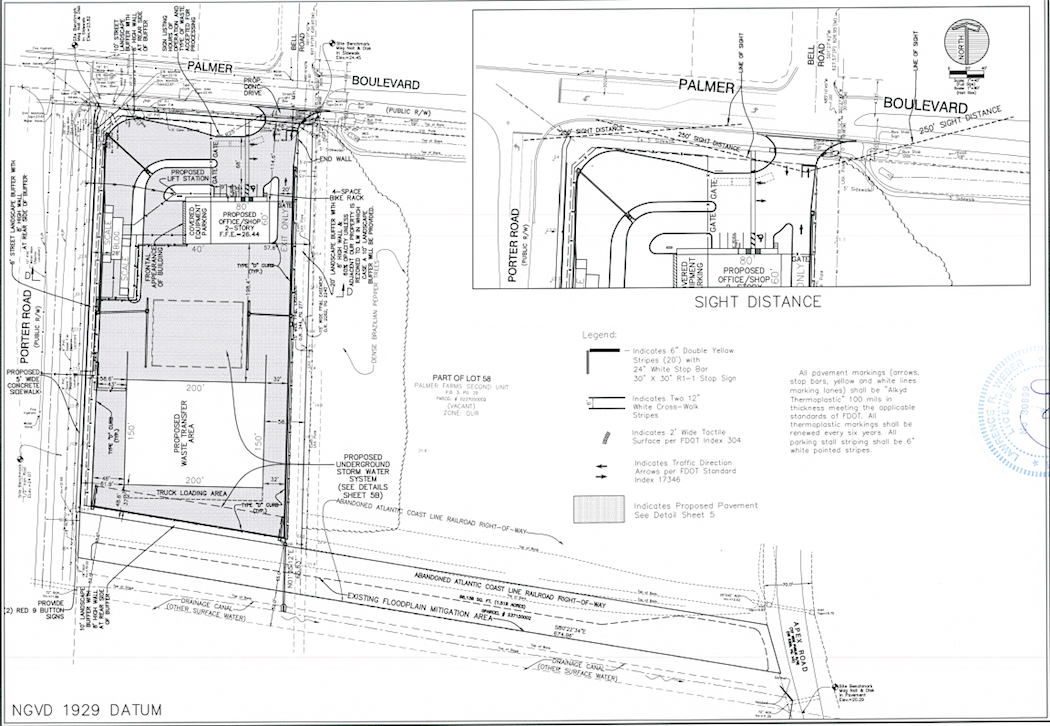
An engineering drawing shows details of the plans for the Palmer Transfer Station. Image courtesy Sarasota County
On Jan. 31, Sarasota County staff issued the necessary permit to the agent for TST Ventures of Sarasota, clearing the way for a waste transfer station to be constructed on property adjacent to the county’s “Quads” parcels.
The Quads are next to the Celery Fields, which has become a major tourist destination in the eastern part of the county.
As news about the permit has spread among residents who live in the area, opposition to the project has begun to mount, The Sarasota News Leader has learned.
Although planned and functioning as a regional stormwater facility for the county, the Celery Fields has become known internationally for the variety of birds seen there year-round, as well as for the number of species that winter on the property.
Among the concerns nearby residents already are expressing about the waste transfer facility site plan are whether the turn lanes for traffic entering and leaving the property will function safely and whether landscape buffering and lighting will be appropriate and adequate.
As approved by county staff on Jan. 31, the site and development plans for the Palmer Transfer Station say, “Refuse collection, mechanical equipment, trash compaction, loading areas, recycling, roof-top equipment and other service function areas shall be fully screened and out of the view from adjacent properties and public [rights of way]. The screening shall extend one foot above the height of the object to be screened.”
The site plans also note that all of the walls around the property are to be constructed 8 feet high.
The News Leader asked county staff this week whether members of the public would have any recourse if they felt the plans were insufficient. Mark A. Loveridge, manager of the county’s Land Development Division, responded in a Feb. 5 email: “There is a process to amend the [County Commission-approved] stipulations by filing a petition through the public hearing process.” However, he added of staff members, “We cannot require additional steps since construction authorization has been issued.”
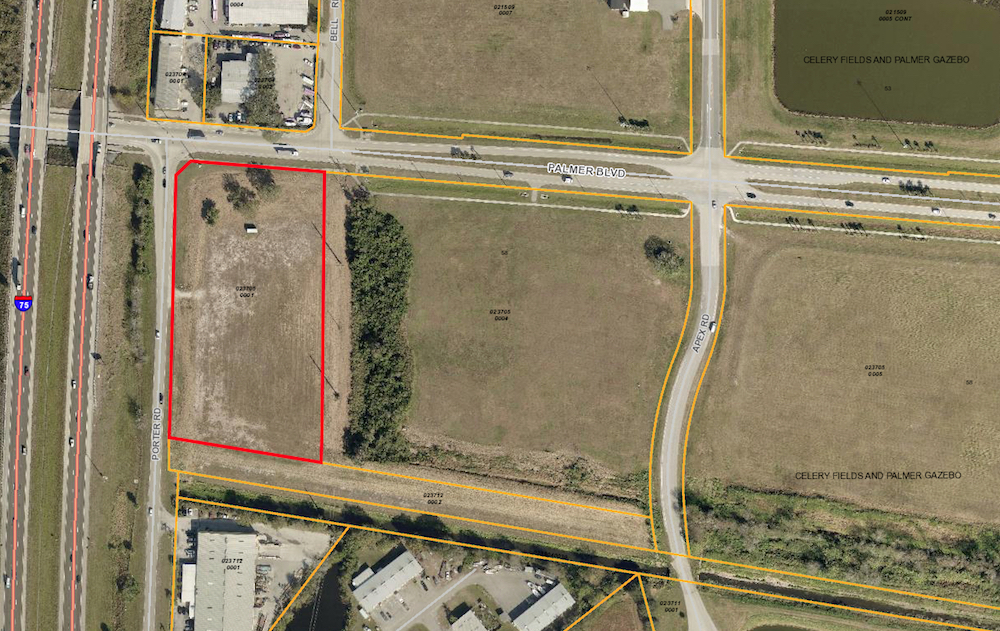
A map shows the TST Ventures property (outlined in red) adjacent to the Southwest Quad owned by Sarasota County. The Celery Fields is to the north. Image courtesy Sarasota County Property Appraiser
During a Feb. 5 telephone interview with the News Leader, Tom Matrullo, one of the leaders of a group that last year represented 50 homeowner associations in the area, said he was not certain at this point whether any of the residents would want to purse the type of petition Loveridge had referenced. “There’s clearly enough public dissatisfaction, or actual anger” over the issuance of the permit, he said. Still, “We’d have to look into how that [petition process] works.”
Among their greatest concerns, Matrullo indicated, advocates of the Celery Fields are worried that if the waste transfer station is constructed as proposed, its existence could influence future county planning for the Quads.
Last year, the County Commission gave the group representing the 50 homeowner associations — the Fresh Start Initiative — the opportunity to offer suggestions about development on the Quads that Fresh Start members felt would be compatible with the Celery Fields. As they made their final presentation to the commission — in September 2018 — Fresh Start representatives emphasized the need for the commission to consider the entire area — and how it has changed over the decades — as they eventually discuss potential uses of the county property.
During the Feb. 5 telephone interview, Matrullo stressed that the residents who participated in the Fresh Start effort were not focused just on the Celery Fields. Likewise, at this point, many of them are not just concerned about the waste transfer station, he continued. “We are talking about the process by which planning occurs in Sarasota County, and that is a countywide issue.”
Commission approval in 2015
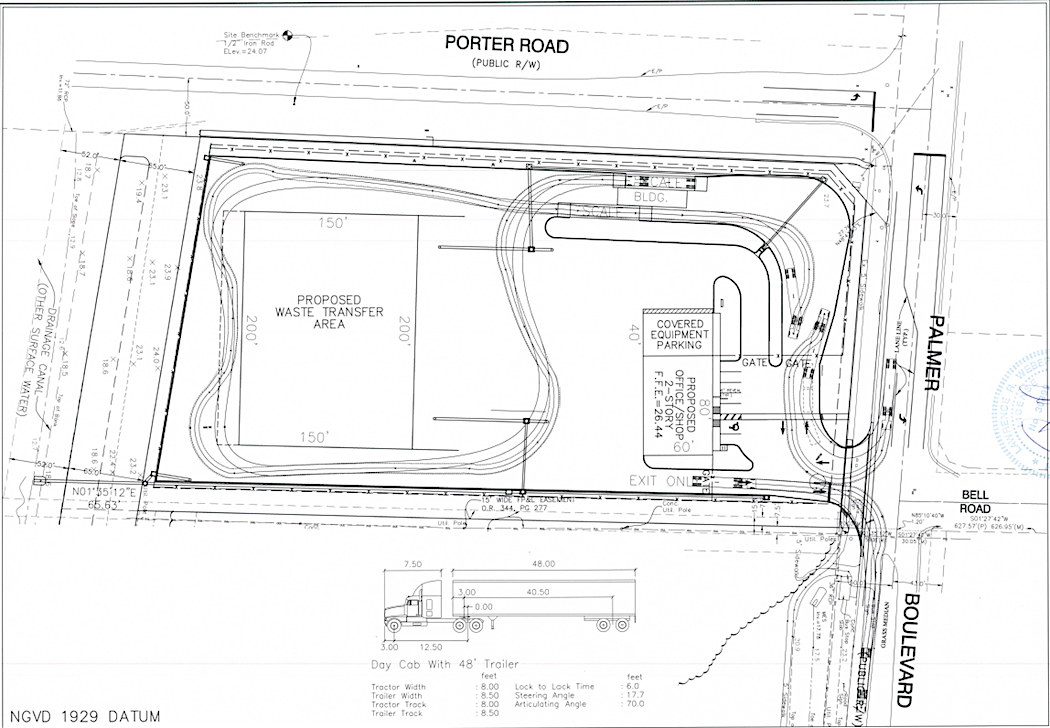
An engineering drawing in the site plans shows these details about the types of trucks that will be coming to the facility and traffic flow. Image courtesy Sarasota County
Sarasota County Property Appraiser Office records show Gabbert has owned the site — located at 6150 Palmer Blvd. — since April 2015, when he bought it for $100,000.
During the 2015 public hearing, Robert “Bo” Medred, president of Genesis Planning and Development in Bradenton — who represented Gabbert — pointed out that a waste transfer station accepts material such as yard waste from landscape contractors and construction debris from building contractors. That material then is transferred into trucks for transport to other facilities.
A waste transfer station, Medred stressed, “is not a landfill and does not accept domestic garbage of any kind.”
Medred also pointed out that an 8-foot concrete wall with “decorative precast panels,” a hedge and canopy trees would be used as buffers around the site.
County Planner Jack Wilhelm noted during the hearing that the types of allowable materials for the facility would be concrete, rocks, broken asphalt, land-clearing debris and construction and/or demolition debris.
Wilhelm explained that no long-term storage of materials would be permitted on the site. The proposed hours of operation, he added, were 7 a.m. to 5 p.m. Monday through Saturday.
This engineering drawing for the Palmer Transfer Station offers additional details about the traffic flow plans. Image courtesy Sarasota County
Gabbert originally planned to combine his Palmer Boulevard property with what county staff and the commissioners refer to as the Southwest Quad. At one point, Gabbert also planned a construction and yard waste recycling facility on that Quad. However, following a day-long public hearing in August 2017, the County Commission voted 3-2 to deny Gabbert’s petitions for that project. As a result, Gabbert informed county staff that he was backing away from tentative plans to purchase the Southwest Quad.
Moving forward on the other plans
On April 25, 2018, Lawrence R. Weber of Weber Engineering & Surveying in Sarasota — acting on behalf of Gabbert — formally submitted to county staff an application for the permit for the waste transfer station.
After review of the documents, county staff pointed to changes from the original plans the County Commission approved in October 2015. As a result, staff deemed the materials insufficient, providing detailed comments in a document dated June 15, 2018.
Further staff exchanges with the company ensued, county records show.
Finally, in the Jan. 31 letter to Weber, Loveridge, the manager of the Land Development Division, wrote that staff had approved the plans submitted on Dec. 5, 2018. “Construction shall take place as shown on the approved plans,” his letter states. “Deviations from the approved plans may result in a stop work order being posted.”
The document does include a number of stipulations. Many of them pertain to air and water quality, landscaping, lighting and tree protection.
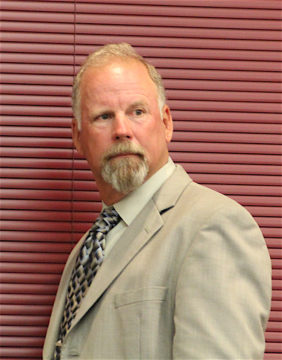
James Gabbert awaits the start of the Aug. 23, 2017 on his proposed construction waste recycling plant. File photo
For example, the “Lighting” section says, “All outdoor lighting shall be designed and located such that the maximum illumination measured in footcandles at the property line does not exceed 0.2 on adjacent residential uses, and 0.5 on adjacent commercial sites and public rights-of-way. (Zoning Ordinance Section 7.5.4.)”
Regarding air and water quality, the document points out that National Pollutant Discharge Elimination System Construction Generic Permit coverage is required, “and that a copy of the certified Stormwater Pollution Prevention Plan (SWPPP) must be provided to Sarasota County before site work begins.”
Further, “All tree removal shall be consistent] with the permit county staff provided, “and all required tree plantings necessary to satisfy the Tree Permit conditions shall be completed prior to final site certification.”
The Jan. 31 letter also points out, “[T]his approval requires that all other applicable state or federal permits be obtained before the commencement of development.”
The first page of the development plans submitted to county staff on Dec. 5, 2018 notes that among those are permits for signs; a general permit from the Florida Department of Environmental Protection (FDEP), plus FDEP water and wastewater permits; a county Utility Construction Permit; and a county right of way use permit.
County staff has apparently accepted Lambert's recommendation to rezone parcel #3 for industrial uses, and the Lambert recommendation has been placed on the Board's agenda as a discussion item for Oct. 10.
If the Board approves, the recommendation to rezone parcel #3 for industry will go through the public process - neighborhood workshop, planning commission, and final Board hearing. Fresh Start will attempt to keep the public advised.
Fresh Start has noted that the instigation to hire a consultant to rezone parcel #3 came from Commissioner Al Maio. Two of the strongest supporters of industry for the Quad parcels #2 and #3 are James Gabbert and Robert Waechter. The Lambert assessment and follow-up rezoning could cost taxpayers as much as $61,290.
James Gabbert
Gabbert's proposal for a large open demolition waste crushing plant on parcel #2 caused a large public outcry in 2017, and it was defeated, 3-2 at the final public hearing 8.23.17. Commissioners Maio and Moran voted for Gabbert's proposed waste plant. Gabbert is still seeking to build a waste transfer operation on 6 acres immediately to the west of parcel #2 at Porter Rd. and Palmer Blvd.
Waechter, who owns several warehouses immediately to the south of parcel #2, has opposed the citizens' effort to keep the Quad parcels, which are public lands, from being sold to private industrial developers. At the Fresh Start presentation on 9.12.18, Waechter argued that as the area is already overridden with large semi-trucks, it should have more industry, not less.
Fresh Start, a citizens' group seeking alternative public uses for the Quad parcels, has noted several concerns with the Lambert Advisory recommendation:
Commissioner Maio's initial reason for hiring the consultant for rezone was an alleged budget shortfall. He now says there are no shortfalls and that the County is in excellent fiscal condition.
Lambert's methodology was skewed toward selling public land: it looked only at sales price, not at compatibility, community concerns, or trends of eco-tourism and residential development in the immediate area, approved by the County.
With rapid County approvals for over 22,000 acres of new housing development in East Sarasota, the additional population will need open space, parks, athletic facilities. The 30 acres of public lands at the quads are perfect for such use.
Public lands should be used for beneficial public use, not be sold when they will only profit private industrial owners.
A land use consultant hired by Sarasota County to rezone a portion of public land near the Celery Fields sanctuary has recommended that the 7-acre parcel be sold to an industrial developer.
“In sum, the highest and best use of the subject property is considered to be for industrial development, with an estimate land evaluation of roughly $1.3 million; or, $3.40 per square foot,” writes Lambert Advisory LLC in its report to the county.
Note: On Wednesday, Sept. 12 at the County Commission, Fresh Start will present an analysis in support of a resolution to dedicate all three public parcels to public benefit. The estimated time is 9:30 a.m. Agenda.
Quad parcels at Apex & Palmer
Lambert filed the report on August 22, 2018. The Miami firm was hired by the Board of Sarasota County Commissioners on the premise that current budgetary shortfalls needed to be made up through the sale of public lands. Since that meeting, the Board has appeared to revise its estimate of the county’s financial plight. Commissioner Maio, who initiated the rezone decision, now says that the county coffers are full, its fiscal condition is solid, and there will be no shortfalls in 2019 or 2020.
The county agreed to pay Lambert $61,290 to rezone Parcel #3, at the Northeast quadrant of Apex Road and Palmer Boulevard. The analysis, called a “highest and best use” report, compares the parcel to existing properties in Sarasota for possible residential, retail, office, industrial or hotel uses.
“Highest and best use” (HBU) is a method of assessing real estate that looks solely at monetary value. Other considerations of use value such as environmental, recreational, social or economic opportunities are specifically excluded in HBU studies.
A coalition of 50 neighborhoods which has sought to persuade the County to dedicate three parcels at the same intersection, including parcel 3, for community uses -- is concerned that the Lambert study could sway the five-member commission to approve the sale not only of the seven-acre parcel #3, but also to rezone parcel #2, 10.6 acres, for private industry.
”It’s like a chess game,” said Glenna Blomquist, a member of Fresh Start, the HOA coalition. “If the county accepts this report, it can proceed to rezone parcel three without even having identified a buyer."
Once the land is rezoned, any private developer whose industrial operation fits the zoning can buy the property and build without public input. Last year, a giant warehouse operation sought to purchase parcel #3, and hundreds of Sarasotans came out to oppose it at a public hearing.
“With the property already rezoned, an industrial developer whose proposed use fits within the new zoning would simply by-pass the community,” says Blomquist.
There’s a further danger lurking in this chess match, notes Gary Walsh, president of the Meadow Walk, the nearest community to the Celery Fields. After parcel #3 is rezoned to industry, developers can argue that parcel #2 should also be industrial, because at that point it will be enveloped by industrial zoning on three sides.
Parcel #2 is the 10.6-acre parcel which the Fresh Start group was charged by the Commission to find community-approved conceptual uses for. The group filed a report with those proposed uses in April, and at the Board's request, updated it in July.
“Developers seeking industry here have usually ignored the issue of compatibility, but now it could work in their favor,” adds Fresh Start’s Carlos Correa.
Here's how it could go:
Waechter warehouse
Just to the south of parcel 2 (separated by water and trees) are several warehouses owned by Robert Waechter, who has actively opposed Fresh Start’s efforts to have the County dedicate the land to community uses -- athletic fields, a restaurant or cafe, shops, affordable housing, meeting rooms, a historical museum exhibition space.
West of parcel #2 separated by trees is a six-acre parcel owned by James Gabbert, who plans a waste transfer station there. Gabbert last year proposed to put a giant waste processing facility on his six acres plus the 10.6 acres of parcel #2.
Hundreds of residents and visitors who value the Celery Fields turned out to the Aug. 23, 2017 hearing in vehement protest, and Gabbert’s petition met with defeat.
Fresh Start says it will be taking a closer look at data in the Lambert report -- figures used for land value, population growth estimates, traffic and more.
“Our analysis was completed before we saw the Lambert report, and takes a completely different approach” says Tom Matrullo of Fresh Start. “We begin by looking at the land itself, at the community with whom we've consulted, at market trends, and at potential synergies with neighborhoods, commerce, and eco-tourism -- the Celery Fields has been a place of respite from the Red Tide we've recently experienced along our coastline."
The basic question of land use goes beyond data to a more fundamental question: how does Sarasota County plan? Fresh Start puts it this way:
"On one hand, you have a corporate analysis that looks only at money, and by design ignores everything our residents care about; on the other, you have everything our residents care about: the environment, community resources, things for children to do, social and educative activities, clean air, recreation, healthy birds, manageable traffic, and the benefits of a thriving tourist area."
On Wednesday, Sept. 12 at the County Commission, Fresh Start will present an analysis in support of a resolution to dedicate all three public parcels to public benefit. The estimated time: 9:30 a.m. The public is welcome, but as this is not a hearing, public input will be limited to 3 minutes before or after the morning agenda, in the segment known as "Open to the Public."
County video of the April 25th Fresh Start presentation of four proposals for Quad Parcels 1 and 2 to the Board.
The four proposals to the Board were outlined and Fresh Start was encouraged to refine them and return with a report before the Board's vacation break.
Fresh Start returned on July 11 to present its proposal, which can be found here.
The April 25 begins at the 30 minute mark, and ends at 1 hr. 27 minutes:
Here is the report of the Fresh Start Initiative to the Board of Sarasota County Commissioners:
To: The Board of Sarasota County Commissioners
From: The Fresh Start Initiative
Re: Update Report
Date: July 11, 2018
The Executive Council of Fresh Start is pleased to present this update report, Public Uses for Public Lands at the Celery Fields, which offers our communities’ sense of the highest and best use of the quad parcels at Apex and Palmer Boulevard at the Celery Fields.
This update focuses on progress made since our last report of April 25th, 2018 (our prior reports are attached for ease of reference). We anticipate that you will address this community request for action after your summer break, and we look forward to a positive outcome for our community.
Brief background
On Nov. 28th, 2017, the Board granted the Fresh Start Initiative time to determine the priorities of our communities in the area of the Celery Fields with regard to appropriate and feasible uses for two of the three Quad parcels. Specifically you removed parcel #1 from the surplus list, and chose not to put parcel #2 out for sale pending the Fresh Start effort. You directed that a consultant be hired to rezone parcel #3 for “highest and best use,” with the intent to sell it. [Minutes (1)]
On April 25th, we reported that our residents and an advisory panel had examined over 40 conceptual ideas and proposals from our communities. Through a process of expert evaluation and rigorous community selection (method described in April 25th presentation), four proposals were deemed to best meet the four criteria of feasibility, compatibility with the area, utility to the neighbors, and economic viability:
The community expressed the highest support -- 84% -- for option 4, the $1 million YMCA proposal featuring pickleball, tennis, basketball, a shaded exercise area, open sports field, parking, pavilion and gourmet food truck area. Since April, at your direction we have focused on refining that proposal and addressing questions raised in our individual meetings with the Board and with staff in May and June.
Survey and Site Analysis
In May, Fresh Start performed a short survey (4) of its HOAs asking what sports fields -- for soccer, baseball, football -- and sports courts -- pickleball, tennis, and basketball -- currently are available to them. It turns out that none of these facilities are publicly available East of I-75. To reach the nearest tennis, baseball or soccer fields required drives of up to 9 miles. It turns out that nearly all public sports fields and courts lie west of the Interstate at Colonial Oaks, Fruitville Park, 17th Street, each with limited facilities to serve its nearby communities.
Also in the past couple of months, Tampa-based SEER Analytics performed a site study authorized by the Sarasota YMCA which is attached to this report (3). It reveals a substantial user base within a short radius of parcel #2: More than 43,500 households would be within easy driving distance of the facility. The SEER study includes detailed demographic data and finds a ready community of households to make use of a YMCA facility there.
Learning & volunteering: YMCA and Audubon
We’ve also learned more about the YMCA’s range of programs for children. In certain counties, YMCAs lease parklands to provide summer camps. At the Celery Fields, the Sarasota Y could offer a rich array of children’s programs making great use of the natural treasures right next door. Think of kids birding with Audubon volunteers, and fishing, hiking, and kayaking with YMCA leaders. A YMCA at the Celery Fields would amplify the range and richness of what our community’s seniors and children can experience.
Zooming Out
We thank you for the opportunity to present these proposals, which grew out of a half-year of serious community outreach, consultation, feedback and choices. The ball is now in your court. As a final consideration, let’s zoom out from this present moment, and remember what brought us to this point.
On August 23, 2017, this Board experienced the community’s shock and outrage that an open air industrial waste facility would even be considered for parcel #2:
Residents of neighborhoods that didn’t exist when the area was zoned MEC in 1983 spoke of profound changes the area has seen, and how much the Celery Fields means to them.
Environmental groups reminded you of the County’s extraordinary good fortune in having an eco-tourist wonderland attractive to 224 species of birds evolve from a stormwater project.
Citizens wondered what planning principles and vision would allow consideration of heavy industrial uses in this ecologically sensitive area with fragile roads.
After the August 23, 2017 hearing, many believed the Board would direct staff to take a fresh look at this area, consult residents, and work to optimize its potential. Fresh Start arose out of that concern. Even now, a year later, an industrial proposal could compromise the community.
If we zoom out further, big projects are coming. Large-scale housing tracts plan more than 27,000 homes on 20,700 acres stretching from University Parkway at the north end down past Fruitville, Bee Ridge, and Clark roads to SR 681 near Venice. Sarasota County’s open spaces and country roads are vanishing forever.
Commissioners, it is the responsibility of your office to evaluate these large proposed developments in light of public infrastructure, services, and amenities. We take this opportunity to assert the public’s right to a vision that balances private development with public needs.
Fresh Start urges the Board to take this small step towards a proactive vision and a positive direction for the future of Sarasota’s people. On behalf of our 50 communities we ask your support for a YMCA sports facility on the 10.6 acres of Quad Parcel #2. Ideally, all four quad parcels should be dedicated to sensible, interrelated uses that will become more acutely necessary as East Sarasota builds out. Staff has outlined the requisite re-zoning actions for each of our four proposals (8).
Sarasota County is at a significant crossroads: The Board can dedicate these public lands to optimal public uses, or sell them to industrial developer
THIS . . . or THIS?
Vote for your community’s future: Let’s make a healthy fresh start at the Quads for East Sarasota County.
Thank you.
The Fresh Start Executive Council
Glenna Blomquist, Carlos Correa, Tom Matrullo, Gary Walsh