
Subscribe to the SNL
University of Miami scientist links increase in incidence of algal blooms to development in Florida
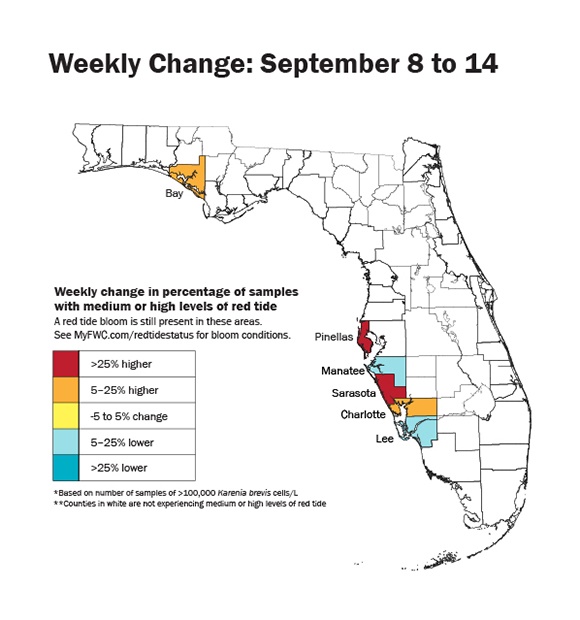
Data analysis clearly shows that the more development Florida has seen — and the higher the population has climbed — the more abundant the red tide algae has become in the Gulf of Mexico off the Southwest coast of Florida.
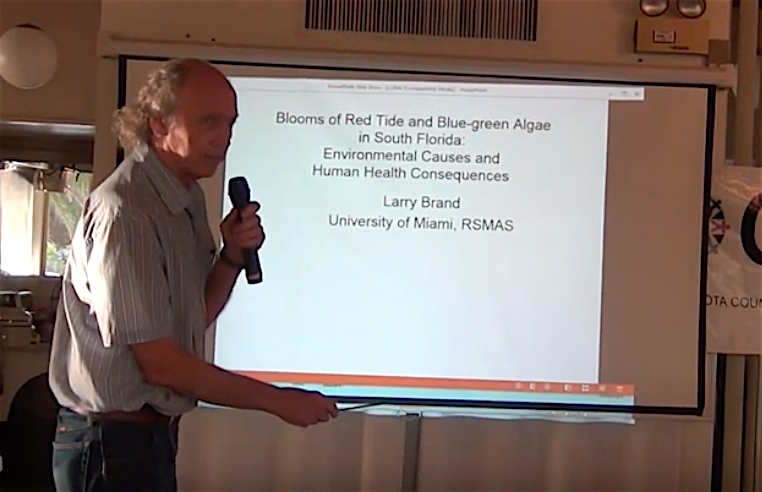
That is just one controversial observation for which Larry Brand, a professor in the Marine Biology and Ecology Department in the University of Miami’s Rosenstiel School of Marine and Atmospheric Science, has been criticized, Brand told the audience during a June 10 presentation for the Sarasota County Council of Neighborhood Associations (CONA).
From 1954 to 1963, Brand explained, data shows that the number of red tide cells in blooms in the Gulf was about 2.5 million per liter. From 1994 to 2002, he continued, that level had increased about 15-fold — to 34.7 million cells per liter. “It’s getting worse.”
For that dramatic an increase to occur, he pointed out, the red tide algae — Karenia brevis— needed 15 times more nutrients.
“I can’t think of any natural nutrient sources that have increased 15-fold over the last 15 years,” he told the audience.
Then where did those nutrients come from? “Basically us,” he said, from agricultural operations and sewage, among other examples.
“A lot of people are not happy about my conclusions,” Brand acknowledged.
Nonetheless, he noted, “I used the raw data.”
Sediment cores taken from Charlotte Harbor from the 1800s on into this century, he said, have demonstrated that the increase in nutrients in that body of water is comparable to the rise in population in Florida.
He also showed the audience several graphs depicting the increase in red tide algae cells in the Gulf during the wet seasons over the past decades, as more runoff flows from inland waterways into that big body of water.
“A lot more nutrients are coming down the Caloosahatchee River,” he added, noting that the U.S. Army Corps of Engineers (USACE) “greatly enlarged” a connection from the river to Lake Okeechobee about 1960.
Initially, Brand pointed out, the lake’s watershed was much smaller. However, over the years, it was enlarged fourfold, to include the sugar cane fields to the south, the Kissimmee River Basin and the Everglades.
“A lot more nutrients are coming down the Caloosahatchee River,” he said, which flows west to the Gulf of Mexico.
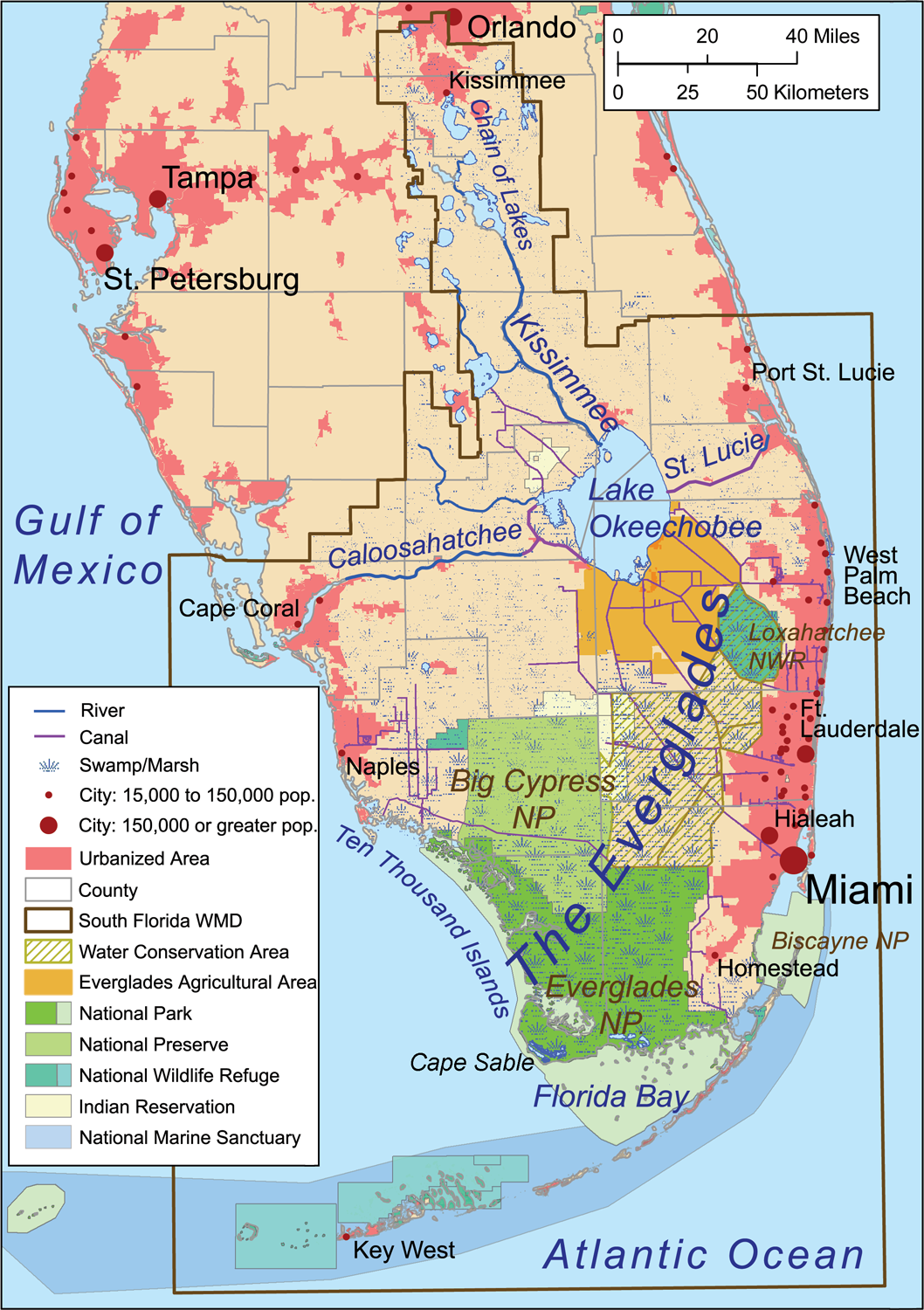
As the News-Press explains, the releases are designed “to protect thousands of lives south of the lake, as well as large agriculture operations and drinking water sources for millions of Floridians.”
The nutrients also flow to the southwest coast in the Peace River, Brand told the CONA audience.
Whenever he goes on a cruise, he continued, he always sees “a higher amount of algae near the mouth of [the Caloosahatchee].”
Brand also talked — as red tide researchers with Mote Marine Laboratory have — about the fact that the flow of the Loop Current in the Gulf of Mexico has an effect on red tide blooms. “We never get a red tide when the Loop Current is in the southern position.”
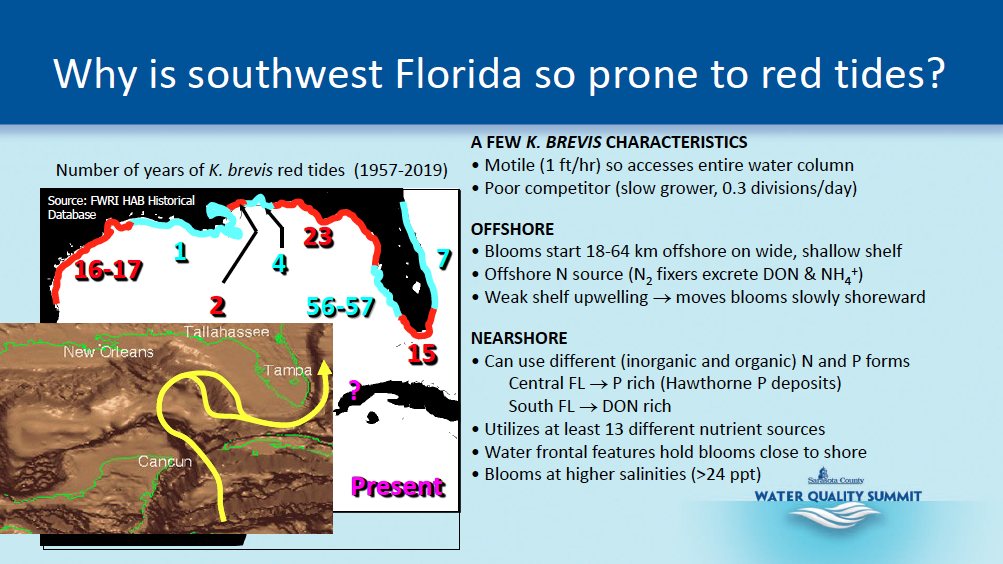
Brand further concurred with other red tide researchers in explaining that nitrogen is the biggest source of food for Karenia brevis.
The health concerns
During his presentation, Brand also devoted time to the health concerns related to the toxin — called brevetoxin — produced by the red tide algae.
The primary effect, he noted, is respiratory irritation. During the height of blooms, he said, hospital records show that 50% of patient visits were for respiratory distress.
A review of the records also found a 56% rise in cases of bronchitis; a 44% increase in asthma; and a 31% increase in pneumonia, according to a slide he showed the audience.
When the amount of red tide algae in the water reaches the level of 100,000 cells per liter or higher, he added, that is when fish begin dying and people get sick. The discoloration of the water is evident at that level, he noted.
However, periods when the algae is present at levels below 100,000 cells per liter also have increased “quite a bit” in frequency, Brand said.
Thus, even when fish are not dying, he stressed, the algae is present in the Gulf.
About 30 different species of fish absorb the brevetoxin, he continued. Research has shown that those species “all have sub-lethal concentrations of the brevetoxin in them.”
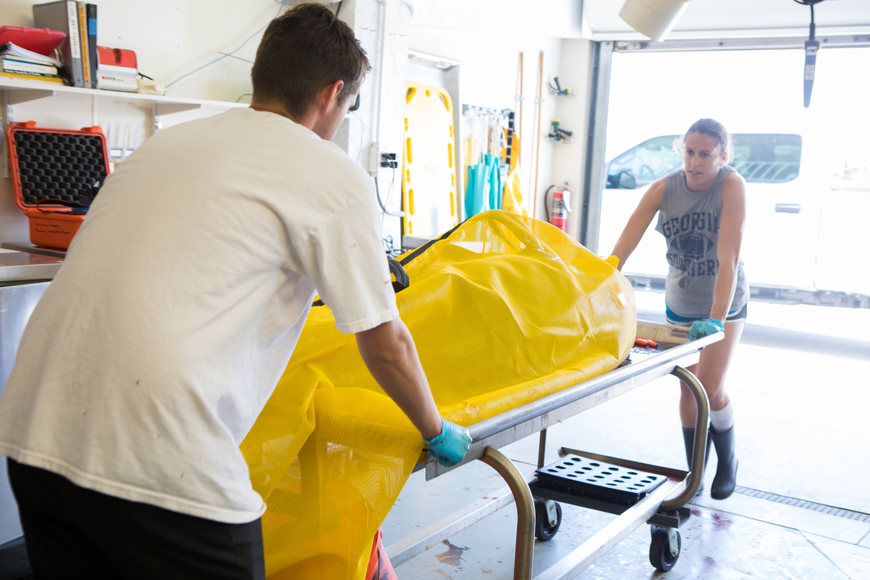
Necropsies performed on dolphins that have died in the Gulf, Brand pointed out, also have provided evidence that the mammals were “packed full of brevetoxin.”
He said he believes those deaths were linked to the amount of fish the dolphins had eaten.
Additionally, Brand told the audience, he suspects that a documented, 40% increase in gastrointestinal problems in humans during red tide blooms is linked to people eating fish that have accumulated the brevetoxin.
The history and the science
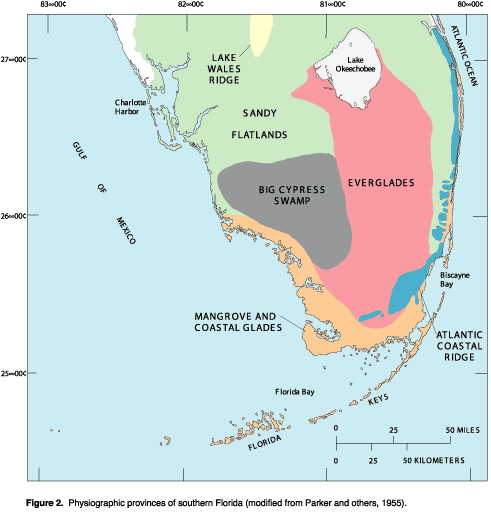
Brand used more graphics as he talked about the geology of Florida, showing how water came to be channeled between two ridges — the Lake Wales Ridge and the Atlantic Coastal Ridge on the eastern side of the state. That water flowed as though it were in a trough, through the basins in that part of the state, as it made its way south to Florida Bay, Brand said.
After the last Ice Age, as the sea level rose and Florida became more humid and experienced more rainfall, he noted, the trough became a wetlands. The Everglades, which is about 5,000 years old, he added, is part of that wetlands.
Over time, he pointed out, all of the organic materials from plants built up into organic peat in that trough, which was “extremely rich in nitrogen.”
Wetlands naturally trap the nitrogen and store it, he said.
When humans drained the wetlands — as they did with the northern third of the Everglades — that organic peat was exposed to the air, he continued; bacteria began attacking it and decomposing it. The nitrogen then was released.
Before the Everglades was drained, Brand said, the organic peat was up to 15 feet deep. “All that nitrogen just ran downstream.”
In 1959, Brand pointed out, as the Cuban Revolution was underway, the United States Government seemed unable to find a way to unseat Fidel Castro as the new leader, so the U.S. began focusing on how it could destroy the Cuban economy. That economy, he emphasized, was based largely on the cultivation of sugar cane.
The U.S. Government began subsidizing the sugar cane industry in South Florida, he said, which led to about a tenfold increase in the size of the crop.
Yet, even though the “huge drainage” of the Everglades occurred in the 1960s, Brand noted, the algal blooms did not start until the 1980s. “What happened? … To keep the sugar cane fields dry, you’ve got to pump out the water, just like The Netherlands.”
The U.S. Army Corps of Engineers (USACE) installed giant pumps and reversed the flow of water into Lake Okeechobee, Brand explained. Instead of water heading south, the water flowed from the lake into the Caloosahatchee and St. Lucie rivers.
However, the filing of lawsuits around 1980 forced the USACE to stop most of the back pumping, he said, leading to a “huge increase of water heading south.”
By the late 1980s, he said, the blue-green algal blooms began in Florida Bay.
Courtesy of the Sarasota News Leader


