Showing posts with label comp plan amendment. Show all posts

Sunday, August 23, 2020

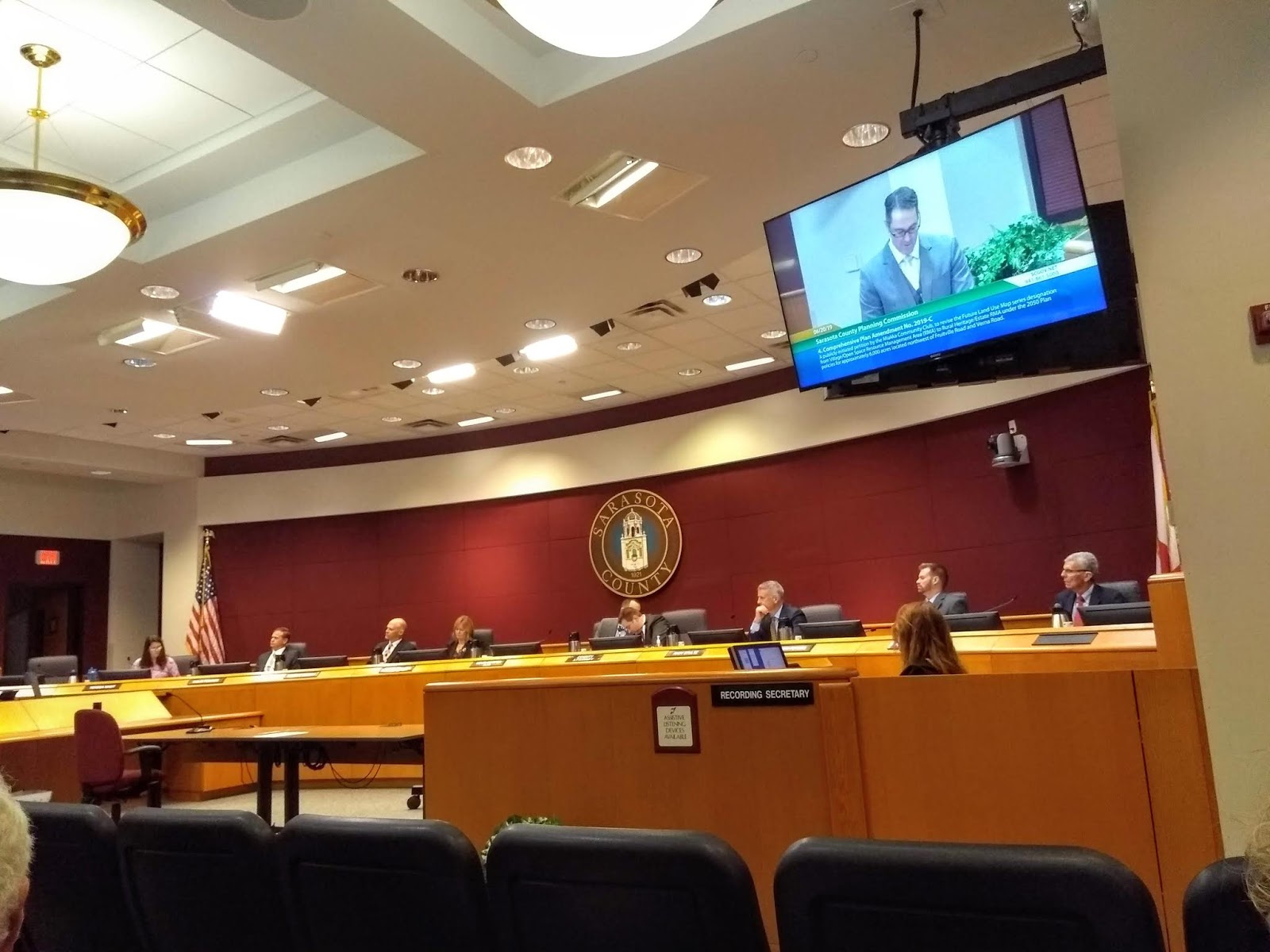
UPDATE: Planning Commission ignores facts, law, and courtesy, advocate says

Update: 8.25.20 from Becky Ayech:

I received a call from Michele Norton with Sarasota County Planning Department regarding what I thought I had heard at the August 20th meeting.  She said that three people had listened to it and they did not hear what I heard. Several of you also reviewed it and no one heard what I did, but there have been several different things people did hear.  Thank you for taking that upon yourselves.

I thanked her for pursuing this.  I was glad that I didn't hear what I thought I did.

With that said, I still reminded her that the public was not treated appropriately.  We had followed all the County's Rules and their manner, that they lectured us and that they were going to get that rule changed is not part of their charge.  She said they will continue to look at this matter.

(Editor's note: There is clearly at least one moment when a voice breaks through the presentation. A masculine voice at 2:47:16 can be heard first indistinctly, then quite distinctly saying "You are the most conservative right human being that I've ever known." It's unclear who was speaking and who was being addressed.) 

===

Editor's note: The email below from Becky Ayech regards the Planning Commission hearing of 8.20.20 on the Publicly Initiated Amendment to the Comp Plan on behalf of Old Miakka. This 170-year-old community in East Sarasota County (Commissioner Moran's District 1) is seeking an amendment to the Comprehensive Plan that would preserve the rural character of the area. (Herald Tribune story).

The email was sent to the Board of Sarasota County Commissioners on Sunday, August 23, which happens to be the third anniversary of the County hearing regarding James Gabbert's Debris Demolition plant proposed at the Celery Fields.

As yet we have been unable to verify the alleged swear word some say they heard duing the PC hearing. 

                                          Video of the 8.20.20 PC Hearing

=============================


To: Michael Moran <mmoran@scgov.net>, ncdetert@scgov.net, "Charles D. Hines" <chines@scgov.net>, Alan Maio <amaio@scgov.net>, cziegler@scgov.net

Good day Commissioners,

This is taken from the County's website:

Purpose: The Planning Commission, as the LPA, is obligated to interpret and advise the County Commission on the adoption of and amendments to the Comprehensive Plan, as well as land use applications filed, pursuant to state statute or existing county ordinances.

At the 8/20/20 meeting of the Planning Commission, the Commissioners DID NOT fulfill or even consider what their purpose is.

Rather, they lectured the participants on how egregious they were by following the process SET OUT BY SARASOTA'S  PLANNING DEPARTMENT AFTER CONSULTATION WITH SARASOTA' S LEGAL DEPARTMENT.

WHEN THE MIAKKA COMMUNITY CLUB FILED THE REQUEST FOR A PUBLIC INITIATED COMPREHENSIVE PLAN WE HAD A $5,000.00 CHECK IN HAND.
WE WERE TOLD THAT WE DID NOT NEED MONEY, BUT 20 SIGNATURES OF REGISTERED VOTERS IN THE COUNTY.  WE PROVIDED 75, 45 WERE VERIFIED.
WE DID NOT DIG UP THIS REGULATION YOUR LEGAL DEPARTMENT DID!  

THE ONLY THING WE ARE GUILTY OF IS FOLLOWING THE LAW.  I cannot say the Planning Commission is guilty of following "the Law" as articulated in their purpose.

At the "process request " hearing in front of the Planning Commission, Mr. Spaeth was asked how much money this would cost, and he told them very little.  This is a map change not a language change.  Never the less, the public had to be lectured on how much this cost the taxpayers.  This is an inaccurate and nonfactual statement.

At the process hearing, Mr Spaeth also pointed out that here are other counties that have the same regulations.

At one point in the hearing, a Commissioner's mic was NOT muted and it sounded like he called someone a "righteous bitch".  Please review the meeting to see if I heard correctly. If I did ,then he should be removed.

Every member of the public who spoke in support of CPA-2019-C was respectful.  The Planning Commission did not return this courtesy.  On your Speaker Card, that one fills out to speak, it talks of civility. The Planning Commissioners were not civil.  They were condescending. They lectured us. NEITHER OF THESE ARE INCLUDED IN THE "PURPOSE" OF THE PLANNING COMMISSION.

At the end of the meeting, a Commissioner said they were going to get rid of this regulation. THAT IS ALSO NOT THEIR "PURPOSE".

The Planning Commission DID NOT address the facts that were presented to them.  Rather, they took the stance of  the proverbial three monkeys, "hear no facts, see no facts, speak no facts".

ask that you look into these statements. The Planning Commission is a reflection of you. This was an ugly reflection.

Please respond to my email. please make sure the "righteous bitch" statement was an error in my hearing.

Respectfully submitted,

Becky Ayech
President
Miakka Community Club

As a postscript.  I chair two of your committees/commission:  The Traffic Advisory Committee and the Historical Resources Committee. 

I WOULD NEVER TREAT ANYONE THE WAY MEMBERS OF THE PUBLIC, WHO  EXCERSIZED THEIR RIGHT TO PARTICIPATE IN GOVERNMENT, WERE TREATED AT THE PLANNING COMMISSION MEETING.

==


See also: Irreplaceable impact of Old Miakka lifestyle by Carrie Seidman in the Herald Tribune.

Thursday, September 5, 2019

9.11: Protect rural heritage or promote urban sprawl

Citizens' Proposal to Cut Density of Northern Hamlet in Half
Wednesday, September 11,  1:30 pm
Sarasota County Commission, 1660 Ringling Blvd., Sarasota

Developers' Proposal to Double Density of All Three Hamlets
Thursday, September 19,  5:00 pm
                          Sarasota County Planning Commission, 1660 Ringling Blvd., Sarasota


Rural Heritage
The fate of 15,000 acres in far east Sarasota County is on the line this month, as County officials weigh competing proposals from citizens and developers.

On September 11, the County Commission will first consider whether to authorize processing of a citizen petition to amend the Comprehensive Plan, as allowed by the County Code.

The petition -- the first ever brought by citizens, not developers -- would reduce the density of 6,000 acres at the northeast corner of Fruitville Road and Verna Road from Hamlet development (.4 units per acre - clustered to one unit per acre) to Rural Heritage Estate (at one unit per five acres), consistent with surrounding homes in that area. The change is promoted by the Miakkka Community Club, representing homeowners nearby, and supported by Control Growth Now. The petition -- indeed the very idea of a citizen petition -- was opposed by the Board-appointed Planning Commission.

Next, on September 19, the Planning Commission will consider a proposal by the developer of that north Hamlet to double its clustered density to two units per acre, as well as for the two other Hamlets to the south, provided that the developer agrees to hook up the County's already overstressed water and sewer utilities. That change -- which would impact 15,000 acres in toto -- is opposed by the County's Development Review Committee, which concluded that it "does not appear to be warranted," as well as by County planning staff and Control Growth Now. (More here.)

Both one unit-per-acre and two units-per-acre are urban densities under the Comprehensive Plan. Control Growth Now has long advocated that such urban sprawl does not belong in the eastern rural lands.

Rural Heritage:Miakka Schoolhouse

On September 11, 2019, you can help a rural heritage community hold the line on broken county promises and thwart another construction invasion.

At 1:30 pm, the Board of Sarasota County Commissioners will decide either to


protect our rural heritage


or 

promote urban sprawl.


Sprawl east of I-75

The Miakka Community near Verna Road and Fruitville Road represents one of the oldest neighborhoods in our county. It's a strong voice. Even if you don't live in East County, this is your concern – what's happening there is a harbinger of what’s coming.


When density in your neighborhood jumps before you turn around, you’ve been had – by developers who changed the rules through sleight of hand. Before you can say "traffic jam," your peaceful neighborhood is a memory.

Out east, residents are fighting back against developers who want to more than triple the density of land as currently zoned. This is leapfrog development!

With the theme of Sarasota Country, this active community adopted the slogan:
"Keep the Country...Country
Rural Heritage - Not Urban Sprawl."
The Miakka Community aims to protect rural heritage land from egregious development and density. This is a fair fight against the unfair developers-take-all boondoggle.

We can all support this community at the commission meeting on September 11, 2019, at 1660 Ringling Blvd. (support agenda item CPA 2019-C to protect Rural Heritage)

Let's be witness to this opportunity for our commissioners to clearly demonstrate that they do NOT support URBAN SPRAWL


More info

This fight is for all of us!


Do we want leapfrog development? More County Utilities feeding nitrogen to our waterways? Do we want to lose our rural heritage?


Friday, May 31, 2019

County officially drops traffic concurrency standards

Courtesy of the Sarasota News Leader


Subscribe to the SNL

County Code revision puts into effect standards for transportation analyses related to new construction, as detailed in 2016 Comprehensive Plan policy


May 30, 2019 by Rachel Brown Hackney, Editor & Publisher

Only proposed Comprehensive Plan amendments and Critical Area Plans can be subjected to more intensive traffic reviews, staff says

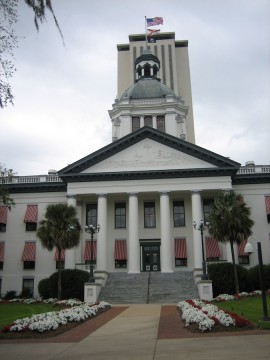
Florida’s historic and new capitols. Courtesy State of Florida

As part of its 2016 update of the Sarasota County Comprehensive Plan, the County Commission approved a new transportation policy that reflected the Florida Statute changes. That policy, 1.3.12, says, “Sarasota County shall continue to review individual applications for rezoning, special exceptions, and approvals under the Land Development Regulations for safety, adequate ingress and egress, compatibility, operational issues at impacted intersections and circulation, as provided in the County Code, but shall not apply traffic concurrency standards to them. The county will review proposed Comprehensive Plan Amendments and Critical Area Plans, and take into consideration their effects on the multi-modal transportation system and the adopted levels of service, and any need for facility improvements they cause or exacerbate.”
However, Matt Osterhoudt, director of the county’s Planningand Development Services Department, explained to the board on May 21, the commission never actually approved changes to the applicable county ordinance to reflect the Comprehensive Plan modifications.
As a result, following endorsements from eight speakers, the commission did just that, on a 4-0 vote. (Commissioner Michael Moran was absent from the meeting.)
Included among the changes is language that establishes traffic impact analysis and site access assessment requirements for specific types of projects.
Osterhoudt emphasized that “more of a robust analysis” of traffic impacts is warranted with proposed Comprehensive Plan amendments and Critical Area Plans (CAPs). Those reviews would include the adopted levels of service for the roads that would be affected, he said.
“Level of Service” refers to a driver’s assessment of how well traffic flows on a road, with “A” being the best level and “F” the worst.
Former Commissioner Christine Robinson of Venice — who had to step down from the board in November 2016 because of term limits — was among those eight people who applauded staff’s efforts to take the steps necessary to amending the County Code.

Former County Commissioner Christine Robinson. Image courtesy Sarasota County

Representing the Argus Foundation of Sarasota, which she serves as executive director, Robinson also pointed out that the County Commission adopted the use of mobility fees, “as a result of a technical report that was brought to [the board].” Those fees replaced the previously used transportation impact fees, she noted, which could be used just for the road network. Conversely, Robinson pointed out, mobility fees paid by developers can be used for sidewalks, for example.
“It’s up to you to decide how to use those [mobility] fees,” she told the commissioners.
Earlier on May 21, Paula Wiggins, manager of the county’s Transportation Planning Division, pointed out that mobility fees would not produce enough revenue to cover the implementation of the county’s 2040 Thoroughfare Plan. However, Wiggins noted, staff has plans for a mobility fee update in 2020.
Another speaker during the later public hearing on May 21, Dave Langhout, vice president of Kolter Homes and past president of the Manatee-Sarasota Building Industry Association, offered the latter organization’s full support of the changes in the Code of Ordinances. “I can’t help but just use one word,” he added: “Finally.”
The lone person who did not endorse the revision of the county regulations was Pine Shores Estates resident Sura Kochman. Her neighborhood borders the site of the planned Siesta Promenade mixed-use development on the northwest corner of U.S. 41 and Stickney Point Road.

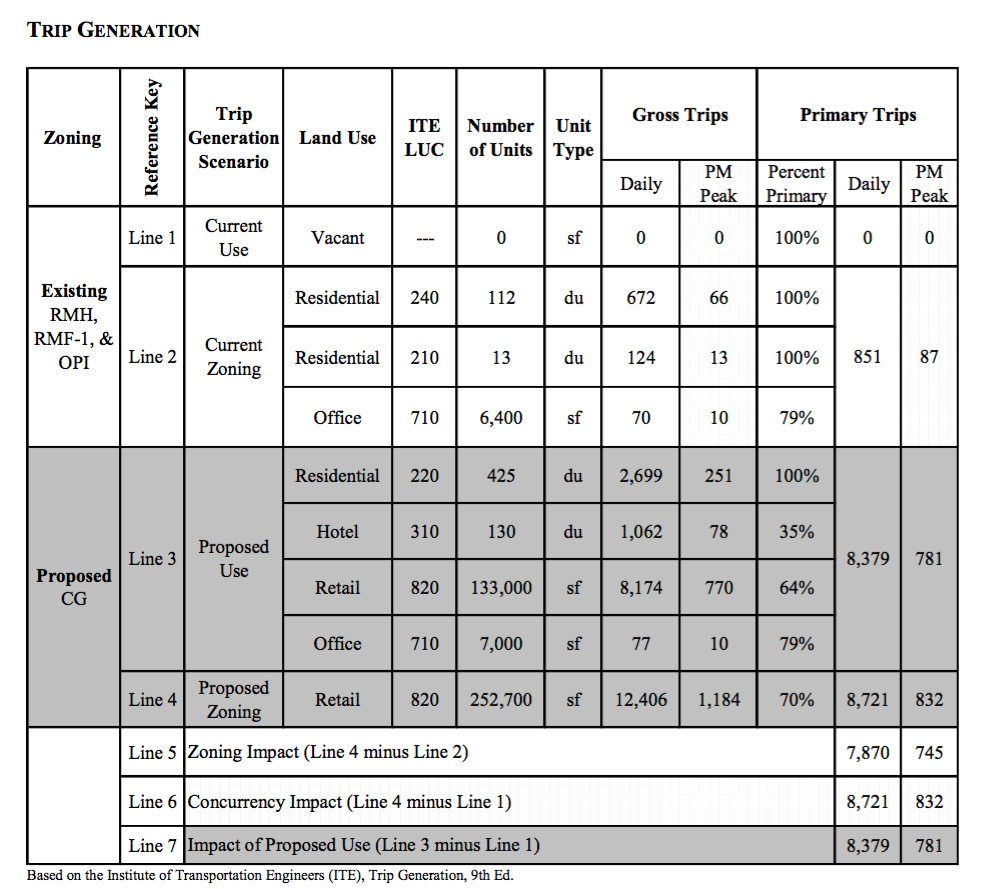
A table in a county staff report in August 2018 offers these details about anticipated traffic generation related to Siesta Promenade. Image courtesy Sarasota County

During her public hearing remarks, she quoted from a June 10, 2015 memorandum from then-County Attorney Stephen DeMarsh to the commission: “If a local government adopts a mobility fee system as an alternative to concurrency, the alternative mobility funding system adopted may not be used to deny, time, or phase an application for site plan approval, plat approval, final subdivision approval, building permits, or the functional equivalent of such approvals. Notably missing from this list are rezones, special exceptions, [developments of regional impact] and similar board-level discretionary approvals. As the statue is currently written, if the Board repeals concurrency and adopts a mobility fee system, it may not only deny Comprehensive Plan amendments because of traffic impacts, but also may deny or condition rezones and similar development approvals because of adverse traffic impacts so long as any conditions imposed do not constitute a concurrency system.”

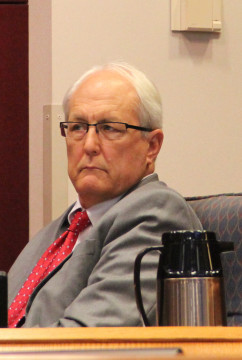
Deputy County Attorney Alan Roddy. File photo

If the ordinance changes proposed that day were approved, Kochman asked on May 21, “Does this opinion still apply?”
(Opponents of Siesta Promenade have pointed to the thousands of extra vehicles it will add to one of the county’s most congested intersections.)
Deputy County Attorney Alan Roddy, who said he believed he actually wrote the 2015 memorandum, explained that it applied to the situation prior to the 2016 update of the Comprehensive Plan. Therefore, the opinion Kochman read would not apply if the proposed amendment to the County Code were approved.
In making the motions necessary to put the changes in effect in Chapter 94, Article 7, of the County Code of Ordinances, Commissioner Alan Maio said, “I was here in 2015. It’s exactly as Mr. Roddy said. … This is not a policy change. It’s just enacting what we did in 2016.”

Courtesy of the Sarasota News Leader

Subscribe to the SNL


Friday, January 25, 2019

UPDATE: Developers seek utility, intensification in rural East Sarasota

East Sarasota residents at neighborhood workshop

It was standing room only at Yeshua's Love Biblical Fellowship in East Sarasota Thursday evening as residents came to listen and to speak back to planning and land use engineer Donald A. Neu.

Neu pointing to area of planned
Super Hamlet at Fruitville/Verna
At the Jan. 24, 2019 neighborhood workshop, Neu presented a plan for a master water and sewer utility and housing development at Fruitville and Verna roads. The plan would double the density allowed for a hamlet by the County's Comprehensive Plan. The concept, still in the early planning stage, calls for 3,200 homes on 1,600 acres, and proposes using transferred development rights generated by the land within the same property. Some commercial development might eventually be added, Neu said during his brief presentation.
The response from the community lasted 45 minutes, with virtually every speaker raising concerns about density, traffic, and potential impacts on their rural way of life. 

"2050 [the county's comprehensive plan] was built for a reason," said one man, adding it was designed to draw lines between areas of higher and lower density that aren't supposed to be crossed. "With this," he added, "2050 is out the door."

Another person said the 2050 plan's intent was to "protect the rural character" and "respect diversity."

"You're creating sprawl at the very eastern end of the county," a woman added.

After 35 minutes of discussion, Rod Krebs, one of several landowners who agreed to explore this development plan, addressed the room. He said he appreciated the courtesy of those who came out, drawing applause when he added, "I may not go forward - I just have to evaluate this."


More about the plan below.


A Jan. 24 neighborhood workshop will propose yet another intensifying amendment to the 2050 Comp Plan. Developers Don Neu and Rod Krebs want to create a new master utility in East Sarasota County at North Fruitville and Verna roads. They will seek to amend the Comprehensive Plan to allow sufficient density to enable the sewer system to be economically viable.

Area of Northeast Sarasota County where intensified
hamlets served by a new master utility are envisioned

Neu and Krebs will ask the county to bless an expanded notion of the hamlet form (more density) and use transfers of development rights in an unprecedented way to increase hamlet density. The novel idea would use TDRs generated by the site on the same site.

In the Comprehensive Plan, hamlets are conceived as low density, consisting of perhaps 1 or 2 units per acre, with a maximum of 400 units. This plan would seek permission for a higher density on more than 2,000 acres north of Fruitville Road at Verna Road.

As one planner notes in the video, the Comp Plan envisioned larger Villages closer to the highway, and smaller, rural hamlets out farther east.

This proposal is designed to stimulate development farther East where Fruitville Road ends, and will require an amendment basically to reverse what the 2050 plan envisioned.

Video of the discussion at the Development Review Committee in December:


The neighborhood workshop:

Thursday Jan. 24
8893 Fruitville Rd. (Yeshua's Love Biblical Fellowship)
6 pm


Area image provided by developers


Tuesday, January 1, 2019

A government for the people

This editorial appeared in Sarasota's Herald Tribune on July 7:
On the day before the 4th of July, traditionally one of the biggest beach days of the year here, the state Department of Health sent out an advisory warning that four of the state’s beaches posed health hazards for visitors due to high fecal levels. Three of those beaches, where the levels of bacteria ranked “poor,” were in Sarasota County.. . . 
      There seems to be a consistent disconnect between our high priority of promoting Sarasota Bay for recreation and our low priority of insuring its waters remain usable. Somehow, we can make a commitment to invest in a multi-million-dollar project like The Bay, but when it comes to an advanced water treatment plant or more septic conversions, the price tag is always too high.  Carrie Seidman - Swim at your own risk:

Carrie Seidman is describing the incongruence of marketing and reality in the city of Sarasota. The same discontinuity applies with more force to Sarasota County.

Take for example the handling of planning wizardry such as Comprehensive Plan Amendments and Special Exceptions.

According to our Section 124-43(b) of the Sarasota County Unified Development Code:

a. A special exception is a use that would not be appropriate generally or without restriction throughout a zoning division or district but which, if controlled as to number, area, location or relation to the neighborhood, would promote the public health, safety, welfare, morals, order, comfort, convenience, appearance, prosperity or the general welfare.

Gabbert
Developers regularly ask for Special Exceptions when the code stands in the way of their plans. James Gabbert was granted an exception to build and operate a waste transfer station on thin, failing roads next to public lands at the Celery Fields, in full view of the highway.*

The area's largest local developer and local campaign contributor wished to build 1,100 homes on a cul de sac where the land use rules allowed 258. Pat Neal asked to amend the county's 2050 Comp Plan, which requires plans defined as "Villages" to have contiguous commerce enhance walkability and reduce traffic. Neal thought his Grand Lake "Village" could do without the contiguity rule, and the Board was pleased to grant his amendment. "The County thinks this is a good product," said one County planner. Neighbors sued to no avail.

Such "investments" in our publicly planned space never seem to cover the costs they impose on taxpayers -- a fact documented nearly two decades ago by the Tischler report. (See also Jon Thaxton on balanced growth).

Last month, an East Sarasota County advocate proposed a public comprehensive plan amendment at the Planning Commission. Anticipating a proposal for large-scale housing project in East County, Old Miakka neighborhood leader Becky Ayech cited the rural heritage designation of the area, whose character, history and rural land uses date back decades. 


The Sarasota County Planning Commission

Ayech isn't asking the County to deny the developer's proposal. Instead she and a substantial number of other voters want County Planning to look at the long-range viability of a rural sector of East County. Such a Comp Plan Amendment from a resident was a first for the county, which is used to seeing and approving amendments from developers seeking to increase density and intensity. ***


Becky Ayech
According to land use experts, the development pattern of five and ten-acre parcels that Ayech’s proposal would protect is one of the few land use patterns that generate surplus tax revenue to the County’s General Fund. That is, these properties pay more in taxes than they consume in services. 

In June, the Planning Commission unanimously recommended denial of Ayech's initiative. They saw no reason to allow residents to consider changes to our comprehensive plan that might help avert massive urban sprawl or other degrading impacts on their property. In September, the Board of Sarasota County Commissioners (BCC) will decide whether to allow Ayech's amendment process to go forward. 

The Planning Commission is an advisory board, made up largely of Realtors, builders, marketers and insurers appointed by the BCC. There is no citizen advocate seat on the Commission. Recently Jon Thaxton, a former County Commissioner who probably knows more about development regulation than anyone else in Sarasota, was denied a seat on the Planning Commission.

The Planning Commission is also the sacred ladder leading from hoi polloi to the County Commission. Their every move is scrutinized by developers, attorneys, builders and business leaders. Anyone who speaks out of tune with the Official Growth Doctrine of the Builders and Contractors industry groups, Matt Walsh, the Argus Foundation. etc., can expect his/her upward path to power and glory go up in smoke.

The pattern of providing concierge service to high-powered developers such as Benderson, Neal, Carlos Beruff and others within this tight governing coterie is unmistakable -- click here for several examples.

Developers ignore public goods - open space, road safety, environmental health -- because their business models see no profit in them. Their petitions come with no plans or funding to improve road capacity – so traffic issues will multiply exponentially.

While our officials grant new building permits, amendments and special exceptions, the costs on the other side of the ledger -- the expense to taxpayers -- is huge.

These expenses of indifference and neglect include:
  • diminution of quality of life; 
  • higher costs of living; 
  • reduced market values for existing housing; 
  • reduced public services and staff; 
  • higher costs for roads, fire, police, and sanitation; 
  • unhealthy waters
  • reduced attention to parks, emergency shelters and evacuation routes.
These privations amount to a "tax" upon all voters who put these officials in office. Residents who have no voice on the Boards that oversee the policy and needs of the people.

Mike Moran (l.) and Al Maio

The other day, the Board ignored a host of complex planning issues and approved a controversial cluster home development next to a venerable development on Boleyn, a rural canopy road.

While our public wastewater infrastructure has been crumbling, developers are going full speed ahead with vast new developments in East County: LT Ranch (Turner family), Waterside (Rex Jensen of Lakewood Ranch), Grand Lake (Pat Neal). Giant Hi Hat Ranch (Turner family) is now speeding toward approval, and if Ayech's effort fails, Rod Krebs and Don Neu will be building thousands of homes in Old Miakka.

The consistent pattern of our elected officials' decisions raises some important questions:
  • Where was their attention when county data showed eight years of rising nitrogen levels of our bays and waterways? 
  • How did they fail to discern major policy and environmental concerns looming on the public horizon while granting plan amendments and special exceptions to one developer after another? 
  • How do those special exceptions square with the UDC criteria: public health, safety, welfare, morals, order, comfort, convenience, appearance, prosperity or the general welfare?
  • Should officials in receipt of more than $10,000 in campaign contributions from developers recuse themselves from voting on large developments or Comprehensive Plan amendments from developers?


Information Bubble

It's the county's job to watch out for us. Do they? In fact, the county has already approved more than 250% of the housing units that state standards call for.

When a government is so subservient to wealth and business interests, it is no longer for the people. Sarasota's elected officials -- from the same tiny ideological gene pool for the last 50 years -- appear little more than a shadow private sector pretending to be the public sector.

Note: This is not about party. The problem is not which party is in power for 50 years, it's that 50 years of any small entrenched group is bound to create a self-serving bubble. Its spectrum of ideas contracts, outreach to diverse elements of the commonweal ceases.

Perspectives outside a narrow, self-serving spectrum simply do not exist. Ideas such as:

  • using public lands for public benefit, rather than selling them to private developers; or,
  • doing the actual job of government to maintain aging infrastructure, rather than risking public health and damage to our tourism market; or,
  • encouraging a diversity of views, values and expertise on our advisory boards.

Unlike Mr. Neal, Sarasota's voters will receive no special exceptions. We'll pay, and pay, and pay to fix what's wrong.

But we can redistribute the power.

In 2020, we have single member district voting. We have the power to bring back open, accountable, fair government to Sarasota County.

Sarasota 2020: Government for the People 

______

Notes:

*For details on how the County Commission changed the Comp Plan to enable Gabbert to build a giant open air waste plant, see this timeline.

**Ayech and her neighbors have assembled a great deal of information regarding their proposal. It can be found here.

***See this planning memo in which Ayech's key statements receive thoughtful comments from a respected county planner:


Saturday, April 21, 2018

A Road to Nowhere

The Ibis Street Thoroughfare Comprehensive Plan Amendment No. 2017-F comes before the County on Wednesday, April 25 -- it will be found under item 7 on the Board agenda.

Comment by R.N. Collins:

The Sarasota Board of County Commissioners will take the first step towards building a road to nowhere if it approves the Ibis Street Thoroughfare Comprehensive Plan Amendment during an April 25 public hearing.

The county transportation planning department believes that the traffic congestion south of Twin Lakes Park will be so severe in the year 2040 that we need a new thoroughfare to connect Clark Road to a full interchange at State Road 681 and I-75 via another north–south roadway.

But neither the full interchange nor the north-south roadway exist today, and neither is considered financially feasible by the Sarasota-Manatee Metropolitan Planning Organization.

If the interchange is built, FDOT will design and fund it, but FDOT hasn’t even looked into the need for the interchange yet.

And while the north-south roadway is part of a plan to provide an alternate route from Venice to Manatee County, the project is unfunded.  The project recently suffered a setback when the commission rescinded an important funding request for the segment connecting Lorraine Road to Bee Ridge Road Extension.  That segment is a sorely needed connection needed to support development already under construction at the 5000-unit Waterside Village, the 600-unit Artistry community and the 3,500-unit LT Ranch Village.

So it is highly unlikely the proposed thoroughfare will have anything to connect to for many years or decades to come.  Instead of providing connectivity, it will be a road to nowhere.

Actually, that’s not an entirely accurate statement.

The new thoroughfare will go somewhere.  It will dead end at Manatee County-based developer Pat Neal’s 533-acre sod farm where he wants to build 1,100-home subdivision on land zoned for only 258 homes.

Unfortunately for Neal, county regulations prohibit him from building a large development unless the property has direct access to a major road—one that is part of the county thoroughfare plan.

Normally thoroughfare plan additions are considered after the county prepares an in-depth analysis and after the public has multiple opportunities to weigh-in on the proposal.  In fact, the transportation planning department had wanted to consider several changes to our thoroughfare plan during the 2016 comprehensive plan update.  But those changes could not be processed because the county had not held the required public input sessions.

With the county’s holistic thoroughfare evaluation on hold due to a lack of department resources, Neal convinced the county to let him “adopt” Ibis Street and pursue a privately-initiated amendment.

The private process enables Neal to fast track the proposal to designate his access road as a major road.  It bypasses almost all the public engagement that must occur when the county initiates such a change.  And this case, avoiding a lengthy series of feedback sessions and workshops allows the developer to quickly overcome the prohibition on rezoning his property.

I wouldn’t object if putting a line on a map and saying a dead-end country road is a major road was the only effect of Neal’s proposal,

But it does much more.

It allows Neal to divert impact fees away from curing today’s traffic jams and use them instead to improve a dead-end country road that will be used only by his subdivision for years to come.

We believe road improvement priorities should be determined with more, not less, public input.  And we believe impact fees should be spent on real traffic problems we face today, not on ones that are imagined to occur more than 20 years in the future.

Call or email the Sarasota County Commission today and ask them to vote against the Ibis Street Thoroughfare Comprehensive Plan Amendment on April 25.

-- R. N. Collins

Documents relating to the Ibis Street Amendment are here.

Wednesday, February 14, 2018

Private Comp Plan Amendment to add IBIS Rd. to Thoroughfare Plan

Privately-Initiated
Comprehensive Plan Amendment No. 2017-F
Adding Ibis Street to Future Thoroughfare Plan

Date:        February 27, 2018
Location: Sarasota County Administration Center, County Commission Chamber, 1660 Ringling Blvd., Sarasota, Florida
Time:       1:30 p.m., or soon thereafter
The Sarasota County Commission will hold a public hearing to consider a resolution transmitting Comprehensive Plan Amendment No. 2017-F, relating to the incorporation of Ibis Street into Sarasota County's Future Thoroughfare Plan Maps and Tables, to the Florida Department of Economic Opportunity for review and comment.

The privately-initiated amendment proposes to add Ibis Street from Clark Road (State Road 72) to Future North-South Roadway "A" to Sarasota County's Future Thoroughfare Plan, as shown on the map below: 

The amendment proposes to revise the Sarasota County Comprehensive Plan including Maps 10-8 and 10-9 of the Year 2040 Future Thoroughfare Plan of the Future Land Use Chapter and Map 10-3a, Map 10-3b and Table 10-5 of the Transportation Chapter.
 
Following the public hearing and subsequent review by the Florida Department of Economic Development, the County Commission will hold another public hearing to consider the adoption of CPA No. 2017-F.  The "tentative" adoption public hearing is scheduled for April 25, 2018.

Copies of the proposed Amendment and supporting documents are available during normal business hours in the Planning and Development Services Department at 1660 Ringling Blvd., Sarasota, Florida.  Supporting documents will be available the Thursday prior to the public hearing at www.scgov.net, Meetings and Agendas (Meetings on Demand) to view or download. 
 
You are invited to comment on the request by attending the public hearing or submitting your written comments to: 
 
Planning and Development Services Department

Please call 941-861-5000; TTY: 7-1-1 or 1-800-955-8771; or email: planner@scgov.net or adacoordinator@scgov.net with your questions.

Saturday, July 29, 2017

Citizen Participation in Sarasota County Planning: An Open Letter

July 28, 2017


To: Sarasota County Planning, Matt Osterhoudt, Allen Parsons, Tate Taylor, Vivian Roe


This letter is a follow-up comment pursuant to the Comp Plan Amendment (CPA) meeting you conducted for the Planning Dept. on June 26th. It’s our understanding that the plan amendment then under consideration, 2015-G -- easing constraints on open space and buffers for developments proposed as villages or hamlets under the 2050 Plan -- may no longer go forward. But public comment during two meetings at which we were present (January 18 and June 26, 2017) made clear that the process for CPAs raises two related issues.


First, the  perception exists that with 2015-G the County, as a public entity, seems to be exploring a proposal with little relevance or benefit to any constituency other than the development industry. The changes under consideration seem related only to specific private business concerns -- yet the public meeting and process is termed “publicly initiated.”


Second, it was noted - by myself and others - that while the Board initiated this evaluative process, and Planning is doing its due diligence by holding public meetings, there is no generally understood method by which Sarasota residents might similarly initiate such public evaluations of Comp Plan changes.


When the County acting as a public entity explores certain Comp Plan options that benefit specific parties, it creates a "problem of optics," as they say. The voting public sees the County proceeding with what it calls a “publicly initiated” Comp Plan amendment, but sees no opportunity to be equally proactive. At the Gulf Gate meeting, there was a sense of being invited merely to react to a proposal introduced by an unspecified party.


Greater transparency of origin and purpose of comp plan amendment initiatives would help. To that end, this comment is offered to open a dialog that could lead to a more open and balanced public process.


Please correct or elaborate if any of the following statements regarding the steps leading to the BCC’s approving a proposed public initiative for a comp plan amendment is false or incomplete:


  • The Board votes to proceed with these initiatives. That vote can include discussion, or simply be part of the consent agenda.
  • When presented to the Board, the originator of the initiative is identified, and the perceived public benefit of the amendment is explained.
  • If the proposed amendment applies to a specific parcel or parcels, the location and number of these parcels and acreage are presented as an indicator of the nature of the perceived public benefit.
  • Any actual Comp Plan Amendment is voted on publicly by the Board, with Public comment forming part of the proceeding.


If the actualities differ from what is stated above, please clarify so that we are not proceeding upon mistaken assumptions.


When a proposed amendment comes before the Board for a vote, and the Board decides that it only serves developers, it might advise whoever is proposing the amendment to initiate a private Comp Plan amendment process.


Perceived Imbalances


Conversely, we would propose to open a dialogue with County to address the perceived imbalance between public and private sectors, with special reference to several moments in the planning and land use process. Proposed topics include:


  • Basic visioning of community / sector /  neighborhood character and design.


  • Practical introduction to public initiatives of Comp Plan Amendments.


  • An introduction to Critical Area Planning.


  • Strong expansion of public notification and input regarding any land use or rezoning changes to Public Lands, and to surplusing and sale of same -- see Ord. 2016-087.


  • Putting in place a system to revisit and revise antiquated FLU designations. Given the accelerated pace of development and change in Florida, especially in places like Sarasota that are “in demand,” actual conditions on the ground change constantly. It’s both reasonable and wise to dynamically review old designations when their contexts have changed. Doing so would pre-empt conflicts arising when developers play 35-year-old land use cards that are hopelessly out of sync with all surrounding conditions.


An example


Suppose residents of an area -- say Clark Rd. east of I-75 for the sake of the argument -- wished to ask the Board to explore the idea of requiring a 750-ft buffer for all commercial projects, for the sake of preserving the rural character of the road. (750 feet here is chosen as an illustration, since it’s greater than the existing 2050 rule).


In this case, while the incentive for such a proposal would appear to come from "private" persons, its actual inspiration and purpose stems from a shared public vision of East Clark Rd. as a rural Heritage Road. To be clear, the amendment’s intent in our example is not to prevent development, but to have development fit within a shared public vision. The citizens seek a role in deciding the character of this portion of the County.


So the proposed amendment comes with a public purpose and benefit. If developers were required to abide by the 750’ foot rule, they might discover that the rural appeal of the area -- the fact that it looks entirely unlike Clark Rd. to the west of the highway -- could draw buyers seeking a locale that is neither urban nor suburban. Creativity could be one result.


Why is this important? Because when developers ask for and receive 50-foot buffers (a 450-foot reduction) and other changes to the 2050 Village Plan, they are motivated almost exclusively by the specific density needs and business model of the particular project they happen to be working on.


If residents strongly believe that their area possesses distinctive general features -- without which it would lose its essential character -- they’ll work to ensure that its quality and appeal is not undermined by asystematic, ad hoc developer exceptions.


To summarize: When the County as "the Public" explores amendments that appear to primarily benefit private business, it may appear to cater to special interests. Clarifying both who is instigating an initiative and the details of the public benefit can reduce such mixed signals.


By the same token, residents who wish to have a say in shaping the future of Sarasota (East County for example) would benefit from a clarified participatory process, through which the County may receive collaborative insights to help shape the future vision.


The 2050 Plan was created to represent the vision of the people of Sarasota. To the frustration of many residents, it has been compromised repeatedly as developers line up for exceptions and amendments. Before East County becomes a mirror image of West County, we’d like to collaboratively foster public participation in shaping the undeveloped areas of Sarasota.


A version of this comment will be submitted to the UDC Portal with a request for a meeting with Planners and UDC consultants.


We invite Planning to explore this with us as well through the same public meeting process that you recently so ably conducted at Gulf Gate.


Respectfully,


Tom Matrullo
Co-Founder, Citizens for Sarasota County


Sarasota County Council of Neighborhood Associations (CONA)


Manatee-Sarasota Group of the Sierra Club


Carlos Correa
President of HOA, Pinetree Villages, The Enclave


David Johnson
Secretary, Meadow Walk Homeowners Association, Inc.


Glenna Blomquist
NextDoor Lead, Mockingbird Parish


Keith C. Russo
Chair, Lake Sarasota Community Group


Dan Lobeck
President, Control Growth Now


William Zoller


Lourdes Ramirez


Sura Kochman


Adrien Lucas


Dennis Robertson


Margaret Hoffman


Lynn Nilssen


Geraldine Swormsted

Gayle Reynolds


Damon White


Gretchen White


Cathy Antunes
Co-Founder, Citizens For Sarasota County


Skip Parrish

LeRoy William Hasselbring

Vickie Nighswander

Susan Schoettle

Tom Walker
Co-Leader, Nation Group of Sarasota/Manatee

Patricia Troy
If you wish to add your name, write to sarasotavision@gmail.com